

Pool maintenance for beginners comes down to three jobs done consistently: keep the water moving, keep it balanced, and keep it clean. Get those three right and you'll spend 20-30 minutes a week on a sparkling pool instead of fighting green water every other weekend. We've helped more than 10,000 pool owners build that routine since 2011, and this playbook is the exact system we walk first-season owners through — including the parts you can automate so the pool largely takes care of itself.
Key takeaways
- Three pillars: circulation, chemistry, and cleaning — nearly every pool problem traces back to one of them.
- Test 2-3 times a week: chlorine and pH drift is the number-one cause of green water.
- Run the pump 8-12 hours a day in season so every gallon passes through the filter.
- Automate the big chores: a robotic cleaner erases vacuuming, the most time-consuming task on the list.
- Small daily habits beat heroic rescues: five minutes a day prevents the problems that eat a whole weekend.
The three pillars of pool maintenance
Every clean pool in the world runs on the same three systems, and understanding them turns pool care from mysterious to mechanical.
1. Circulation. Your pump pulls water in through the skimmer and drain, pushes it through the filter, and returns it clean. Moving water is filtered water — and algae hates it. Run the pump 8-12 hours a day in season, because dead spots behind ladders, on steps, and in corners are where trouble always starts first.
2. Chemistry. Chlorine sanitizes the water; pH determines whether that chlorine actually works. Hold free chlorine at 1-3 ppm and pH between 7.4 and 7.6 and you've prevented the vast majority of water problems before they begin.
3. Cleaning. Skimming, brushing, and vacuuming remove the debris that consumes chlorine and feeds algae. This is the pillar with the most manual labor — and the one you can hand off to a machine entirely.
Our full pool care guide goes deeper on each pillar, but the schedule below is genuinely all you need to get through your first season.
Your first-season pool maintenance schedule
Consistency matters far more than perfection. Here's the routine we recommend to every new pool owner:
| Frequency | Tasks | Time |
|---|---|---|
| Daily | Glance at the water, empty skimmer baskets, confirm the pump is running | 2-5 min |
| 2-3x per week | Test chlorine and pH, adjust as needed, quick skim | 10 min |
| Weekly | Vacuum (or run your robot), brush walls and steps, fuller water test, check filter pressure | 30-45 min |
| Monthly | Test stabilizer and calcium, deep-clean the filter, inspect equipment for drips and odd noises | 30-45 min |
Two notes on making this stick. First, never skip the daily glance — cloudiness or a faint green tint caught on day one is a quick fix, while the same problem caught on day four is a project. Second, anchor the weekly tasks to a fixed day. Pools don't forgive "I'll get to it."
One more scheduling reality: your pool's needs aren't flat across the season. Expect the heaviest workload in the first two weeks after opening, while the water is still waking up, and again during the hottest stretch of summer, when chlorine burns off fastest and swimmers are constant. Build a little slack into those two windows and the rest of the season feels easy.
Skimming and debris control
Debris is more than an eyesore — it's tomorrow's chemistry problem. Leaves, grass clippings, and insects consume chlorine as they decompose, and whatever sinks becomes bedding for algae. The habit that matters is a quick pass with a leaf net every day or two, plus emptying the skimmer baskets whenever you walk past them. Full baskets strangle circulation, which weakens all three pillars at once.
If your yard drops serious leaves, you have two force multipliers. A robotic cleaner built for leaf pickup handles everything that sinks, and a solar-powered surface skimmer patrols the top of the water all day so leaves never get the chance to sink at all. Between the two, hand-skimming becomes a rare event instead of a daily chore.
Water testing basics
You can't balance what you don't measure, and guessing is the single most expensive habit in pool ownership. Test strips are fast and perfectly fine for your midweek checks; a liquid drop kit gives more accurate readings for the weekly test. Either way, these are the targets:
| Reading | Ideal range |
|---|---|
| Free chlorine | 1-3 ppm |
| pH | 7.4-7.6 |
| Total alkalinity | 80-120 ppm |
| Cyanuric acid (stabilizer) | 30-50 ppm |
| Calcium hardness | 200-400 ppm |
Chlorine and pH drift the fastest, which is why they get checked multiple times a week. The classic first-season disaster follows the same script every time: chlorine quietly slides low during a hot week, algae blooms overnight, and suddenly the pool is green. Five minutes of testing prevents a weekend of shocking and scrubbing.
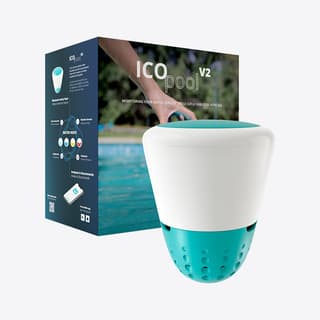
ICO Pool Water Monitor
$499.00 $699.00 Save 29%
Floats in your pool, tracks chemistry around the clock, and tells you exactly what to add through the app — the easiest way for a beginner to stop guessing.
View Details → Free shipping · 30-day returns
How to keep your pool clean: vacuuming vs. a robot
Here's where beginner routines live or die. The floor and walls collect dirt, dust, and sunken debris that skimming never touches, and there are two ways to deal with it.
Manual vacuuming uses your pool pump for suction: pole, hose, vacuum head, and 30-60 minutes of slow passes every week. It works, and we've written a full step-by-step vacuuming guide if you want to master the technique.
A robotic pool cleaner does the same job automatically. It drives itself across the floor, up the walls, and along the waterline, scrubbing and vacuuming debris into its own onboard filter — no hoses, no strain on your pump, no Saturday time slot. In our testing since 2011, a good robot on a schedule keeps a pool cleaner than weekly manual vacuuming does, simply because it cleans more often. Browse the robots we recommend or jump straight to the best picks for inground or above-ground pools.
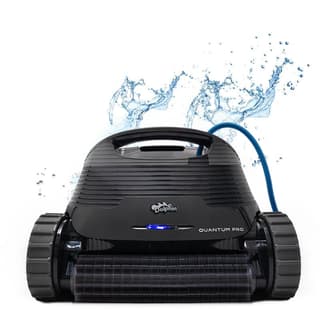
Dolphin Quantum
$1649.00
Set the weekly timer once and the Quantum vacuums your floor, walls, and waterline on its own — with an oversized fine-filter basket that empties in seconds.
View Details → Free shipping · 30-day returns
Filter care 101
Your filter is the liver of the pool — everything passes through it, and it needs periodic cleaning to keep doing its job. Whether you have sand, cartridge, or DE, the routine is the same: learn your filter's clean baseline reading on the pressure gauge, then clean it when pressure climbs about 8-10 psi above that baseline. For sand and DE filters that means backwashing; for cartridges, a thorough hose-down.
Two beginner notes. Don't over-clean — a slightly seasoned filter actually traps fine particles better than a freshly stripped one. And remember that every leaf and handful of silt your robot captures in its own basket is debris your main filter never has to process, which stretches the time between cleanings and backwash cycles. Owners who run a robot on a schedule consistently tell us their main filter goes noticeably longer between cleanings — the robot is effectively a second, finer filter working several hours a week.

Common beginner mistakes to avoid
After fifteen summers of helping new pool owners, we see the same handful of mistakes on repeat:
- Guessing instead of testing. Adding chlorine "because it's been a few days" produces wild swings. Measure first, always.
- Skimping on pump runtime. Cutting the pump to four hours a day to save on electricity is the most expensive savings there is — stagnant water goes green, and the rescue costs more than the runtime ever would.
- Chasing pH while ignoring alkalinity. Alkalinity is the buffer that holds pH steady. If your pH keeps bouncing, fix alkalinity first.
- Shocking at noon. Sunlight burns off chlorine quickly. Shock at dusk so it can work all night.
- Letting debris sit. A leaf on the surface is a ten-second skim; a leaf pile on the floor is a chlorine drain and an algae bed.
- Leaving the cleaner in the pool 24/7. Robots should come out between cycles — constant chlorine and UV exposure ages seals and cables. We cover the right rhythm in how often to run your robot.
- Blaming equipment for water problems. Cloudy water with a working filter is almost always chemistry. Balance the water before you troubleshoot the hardware.
What to buy in your first month (and what to skip)
New pool owners are sold a lot of equipment. This is the honest priority order.
Buy immediately: a decent test kit — drops or a digital tester rather than the cheapest strips, because every other decision depends on these numbers being real. A telescopic pole with a nylon brush and a leaf net. Basic chemicals: chlorine, pH down, alkalinity increaser, and stabilizer.
Buy in month one: a robotic cleaner, if the pool is inground and you value your weekends. It's the purchase that removes the chore people quit over, and buying early means you never build the habit of vacuuming by hand.
Buy when you need it: a cover, a caddy for the robot, spare filter media. All useful, none urgent.
Skip for now: clarifiers and flocculants — fix chemistry and filtration first, and you'll rarely need either. Multi-chemical "kits" that bundle products you may never use. Anything promising to replace testing.
The pattern: spend on the things that tell you what's happening and the things that do the work, and be skeptical of anything that promises to compensate for skipping either.
Your next step
The bottom line
Three pillars, in this order: keep the water moving, keep it balanced, and keep debris out of it. Everything else in pool care is a variation on those. Test twice a week rather than perfectly, run the pump longer than feels necessary, and automate the cleaning so the one chore most people abandon happens whether you feel like it or not.
Pool care is a routine, not a talent — circulation, chemistry, cleaning, week after week. Start with the schedule above, automate the chores a machine can own, and your first season will be mostly swimming instead of scrubbing. Bookmark our maintenance guide for the deeper dives as questions come up.
And if you want the cleaning pillar handled for you from day one, our 60-second quiz matches a robot to your exact pool type, size, and debris — or browse our top-rated robots to see what we'd put in our own pools. Free shipping, 30-day returns, and real humans to help if you get stuck.
