

Here's how to open a pool the right way: get the cover off without dumping debris into the water, reconnect and prime your equipment, clear out everything winter left behind, balance the chemistry in the correct order, shock, and filter for 24–48 hours before anyone swims. Follow that sequence and you'll go from winter cover to swim-ready in under a week. We've been opening, cleaning, and servicing pools since 2011 — 70+ robots hand-tested, more than 10,000 pool owners helped — and this is the exact pool opening checklist we use every spring, including the step most guides skip: putting your robot to work on day one.
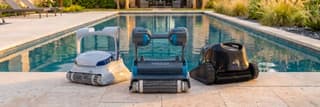
Key takeaways
- Open early: when daytime highs hold at 65–70°F. Algae wakes up before you do.
- Order matters: debris out first, then alkalinity, pH, hardness, stabilizer — and shock last.
- Let the robot do it: a robotic cleaner with a leaf bag clears a winter of debris in one or two cycles.
- Filter 24–48 hours: run the system continuously after shocking, then retest before anyone swims.
- Don't drain: opening almost never requires draining the pool — top off and treat instead.
When should you open your pool?
Open when daytime temperatures hold consistently around 65–70°F — for most of the US, that's somewhere between March and early May. It feels early, and that's the point. Algae starts multiplying once the water under your cover creeps into the 60s, so an early opening usually means skimming off a little dust, while a late opening often means fighting a green swamp with a week of chemicals and round-the-clock filtering.
Early openings are cheaper, too: less shock, less filter runtime, less brushing, and less wear on a cover that's been carrying debris for months. If you closed your pool carefully last fall, opening is mostly reassembly plus a few days of patience. Here's how the work spreads out.
Your pool opening timeline at a glance
| When | What to do |
|---|---|
| One week out | Buy chemicals and fresh test strips, check the cover pump, pump standing water off the cover, sweep debris away, and confirm the robot and pool equipment survived storage. |
| Opening day | Remove and store the cover, top off the water, reconnect the equipment, prime the pump, clear winter debris, test, balance, and shock at dusk. |
| The week after | Filter 24–48 hours straight, run the robot again, brush daily, empty baskets, and retest until the water is clear and chlorine settles at 1–3 ppm. |
Spread it out like this and no single day is more than a few hours of actual work. Now the full sequence.
The 12-step pool opening checklist
- Drain and clear the cover. Pump the standing water off the top, then sweep or blow off leaves so nothing dumps into the pool when the cover moves.
- Remove, clean, and store the cover. Scrub it with a soft brush and mild cleaner, let it dry completely, and store it sealed and off the ground — a damp, folded cover comes back moldy in fall.
- Top off the water level. Bring it up to the middle of the skimmer opening so the pump can pull properly.
- Swap winter plugs for the real thing. Pull winterizing plugs from the returns and skimmer, reinstall the drain plugs in your pump, filter, and heater, and put the pressure gauge and baskets back in place.
- Reconnect equipment and accessories. Reattach anything you disconnected at closing, then reinstall ladders, handrails, and fittings.
- Prime and start the pump. Fill the pump housing with water, open the valves, start it up, and bleed air from the filter until the pressure gauge steadies. Watch the equipment pad for drips for a few minutes.
- Clear the winter's debris. Net out the big material with a leaf rake, then send in the robot — we cover this in the next section, because it's the step that saves the most labor.
- Brush everything. Walls, steps, ladders, waterline. Brushing breaks up the invisible biofilm so your shock can actually reach it.
- Test the water. Use fresh test strips or a liquid kit. Reagents more than a year old read low and will have you dosing blind.
- Balance in the right order. Alkalinity first, then pH, then calcium hardness, then stabilizer — the full breakdown is two sections down.
- Shock at dusk. Once the water is balanced, add shock in the evening so sunlight doesn't burn off the chlorine before it finishes disinfecting.
- Run the filter 24–48 hours, then retest. When you can see the main drain clearly and free chlorine has settled to 1–3 ppm, you're officially open.
Total commitment: one honest weekend of work, then a few days of letting the filter and robot do their jobs while you check numbers.
Let a robot handle the first big cleanup
Even under a good cover, a winter's worth of silt, leaf fragments, and fine grit ends up on the pool floor. Hand-vacuuming it is the worst job in pool ownership — slow, back-aching, and half the debris clouds up and resettles before you can catch it. This is exactly the job robotic pool cleaners built for leaves were designed to do: drop one in at step 7 and it scrubs and vacuums the floor and walls while you handle chemistry and equipment.
Our spring routine is two back-to-back cycles. The first runs an oversized leaf bag to swallow the bulk debris; the second runs fine filters to pull out the silt that makes water look dull even when it's technically clean. Empty the filters between cycles — opening debris will pack them completely full, and a packed filter cleans at half strength.
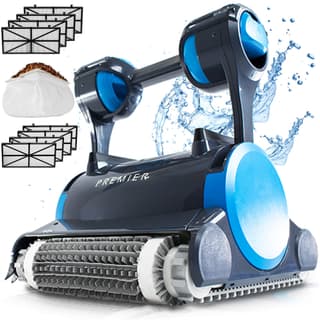
Dolphin Premier
$1999.00 $2499.00 Save 20%
The Premier's oversized leaf bag swallows a winter's worth of leaves and grit in a cycle or two, then swaps to fine cartridges to polish the water for swim season. Full floor, wall, and waterline coverage with a 3-year warranty.
View Details → Free shipping · 30-day returns
Balance your chemistry in the right order
Pool chemistry is sequential, not simultaneous — each parameter affects the one after it. Adjust in this order, circulating for a few hours between steps:
| Order | Parameter | Target range |
|---|---|---|
| 1 | Total alkalinity | 80–120 ppm |
| 2 | pH | 7.4–7.6 |
| 3 | Calcium hardness | 200–400 ppm |
| 4 | Stabilizer (CYA) | 30–50 ppm |
| 5 | Free chlorine | 1–3 ppm |
Alkalinity comes first because it's the buffer that holds pH steady — adjust pH before alkalinity and you'll be chasing it all week. Calcium hardness protects plaster and equipment from aggressive water, stabilizer keeps sunlight from stripping chlorine out of the pool, and sanitizer comes last because shock works dramatically better in balanced water.
If testing is the part of pool care you dread, a smart monitor removes the guesswork entirely — especially during opening week, when the water changes by the hour.
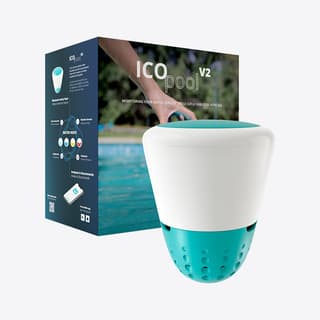
ICO Pool Water Monitor
$499.00 $699.00 Save 29%
Drop the ICO in at opening and it monitors your water continuously, sending exact dosing guidance to your phone — the fastest way to get from winter water to balanced without a chemistry degree.
View Details → Free shipping · 30-day returns
Common pool opening mistakes to avoid
After fifteen summers of helping pool owners recover from rough openings, we see the same handful of mistakes every spring:
- Dragging a loaded cover off the pool. Everything sitting on top slides into the water. Pump and sweep first — ten minutes that saves days.
- Shocking before balancing. Shock added to unbalanced water is far less effective and can cloud the pool or scale your surfaces.
- Trusting last year's test strips. Expired reagents read low, so you dose blind and wonder why the numbers never move.
- Draining the pool to start fresh. Almost never necessary, and in areas with high groundwater it can float a shell or wreck a liner. Top off and treat instead.
- Swimming too soon. Wait for clear water and 1–3 ppm free chlorine — typically two to four days after opening.
- Skipping the retest. Chemistry keeps shifting as the water turns over. The follow-up test is what confirms the pool is actually ready, not just clear-looking.
Opened to a green pool? Don't panic
If the cover comes off to reveal green water, algae got a head start over the winter — it doesn't mean you did anything wrong, it just means the sequence changes. Balance the water first, brush every surface hard, shock at double or triple strength, and run the filter around the clock until green turns to cloudy gray. From there, fine filtration finishes the job over a few days. Our full recovery walkthrough is in why is my pool green, and if the bloom was heavy, a robot running ultra-fine media — see our picks for dead algae cleanup — will pull the dead bloom off the floor days faster than any hose vacuum.
What to check before you need it: an equipment shakedown
Opening is the only moment all year when everything is off, drained, and accessible. Ten minutes of inspection now prevents the mid-July failure that ruins a weekend.
The pump and its basket. Check the lid o-ring for cracks and give it a light coat of silicone lubricant — a dried o-ring is the most common cause of a pump that won't prime in June. Look for hairline cracks in the basket itself while it's out.
Filter media age. Cartridges have a service life measured in seasons, not years of storage. If yours went into winter already tired, replace them now rather than fighting cloudy water for a month first.
The heater, before the first cold night. Fire it early in the season while you have time to get it serviced. Discovering it doesn't light on the first cool evening in September is a much worse experience.
The robot's cable and brushes. Uncoil the cable fully and run your hand along it, feeling for stiff or chalky sections. Check brushes for wear — worn brushes are why a robot that ran fine last September seems weak in May. Both are cheap parts and both take minutes to swap.
GFCI outlets. Press test, press reset, on every outlet your pool equipment uses. They're safety devices with a finite life, and a failed GFCI is a genuinely dangerous thing to discover the hard way.
Your next step: make this the easy season
The bottom line
Open earlier than feels necessary. Almost every miserable opening we hear about starts the same way — the cover came off in late May after the water had already warmed under it, and what should have been a two-day job became a two-week algae recovery. Uncover while the water is still cold, work the chemistry in order, and let a robot do the first week of heavy lifting.
A good opening is most of an easy summer — a pool that starts clean and balanced tends to stay that way on a light weekly routine. If you're building that routine, start with our beginner's maintenance guide and the full maintenance hub. And if this spring reminded you that you're still vacuuming by hand, take the 60-second Help Me Choose quiz — we'll match a robot to your pool's size, surface, and debris load, with free shipping, 30-day returns, and real humans to ask if you get stuck.
