
The 30-second answer
- Corded wins on performance: constant suction, unlimited cycle length, lower price for the same cleaning power.
- Cordless wins on convenience: nothing to feed into the water, nothing to coil up afterwards, no power supply to place.
- Battery is the catch: 2-3 hours per charge, several hours to recharge, and it degrades over the years.
- Pool size matters: big pools favor corded; small and medium pools are where cordless is most comfortable.
- Cost of ownership: corded robots often run 8-10+ years; a cordless robot's life is tied to its battery.
The quick answer
For most pool owners, a corded robot is still the better buy: stronger, constant suction, run time limited only by the cycle you choose, a lower price for equivalent cleaning, and a longer service life. Choose a cordless robot when the cable is the thing standing between you and actually using the robot — and your pool is small to medium.
That last point is worth sitting with. The best robot is the one you run twice a week, not the one that scores best on paper. If dragging out a 60-foot cable and positioning a power supply is what keeps yours in the shed, cordless earns its premium in cleanings actually performed.
How each type works
A corded robot is fed by its own low-voltage power supply that sits poolside and steps mains power down to a safe level. The cable carries continuous power to the motors, so pump output never varies — hour three is as strong as minute one. It's completely independent of your pool's filtration system, which is why running one costs pennies rather than adding load to your main pump.
A cordless robot carries a lithium-ion battery pack instead. It runs untethered until the charge is gone, then parks itself — usually at the waterline or a designated wall position — so you can lift it out without fishing. Flagship cordless models add AI and sonar mapping to plan efficient paths, partly because a battery robot cannot afford to waste passes the way a corded robot can.
Side by side
| Factor | Corded | Cordless |
|---|---|---|
| Suction | 4,000+ GPH, constant for the whole cycle | Strong at full charge, tapers as the battery drains |
| Run time | Unlimited — run back-to-back cycles | 2-3 hours per charge |
| Recharge | None needed | 3-5 hours before the next run |
| Cost per cycle | ~$0.05-$0.09 of electricity | Electricity plus battery wear |
| Price for equal cleaning | Lower | Higher |
| Setup each time | Feed cable, place power supply | Drop it in |
| Best pool size | Any, including 50 ft and up | Small to medium; flagships handle large |
| Filtration capacity | Large top-load baskets and leaf bags | Smaller baskets — battery size limits the body |
| Expected lifespan | Often 8-10+ years with basic care | Limited by battery health |
| Warranty (our range) | Up to 3 years | Typically 2 years |
Where corded wins
Big pools and heavy debris. A 50-foot pool under trees needs sustained suction and filter capacity, and both are where the cable pays. Corded bodies have room for oversized baskets and leaf bags because they aren't giving up internal volume to a battery pack. The Dolphin Premier is the extreme example — four interchangeable media types plus a leaf bag built for whole-yard leaf drop.
Consistency. Constant power means the last ten minutes of a cycle scrub as hard as the first ten. On a cordless robot, the waterline pass at the end of a long run is the weakest part of the cleaning.
Value and longevity. Dollar for dollar you get more cleaning from a corded machine, and there's no battery to age out. With a rinse after each cycle and shaded storage, corded robots regularly run eight to ten seasons — see how long robotic pool cleaners last for what actually determines that.
The whole Dolphin ProLine range is corded, and the top models carry up to a 3-year warranty.
Where cordless wins
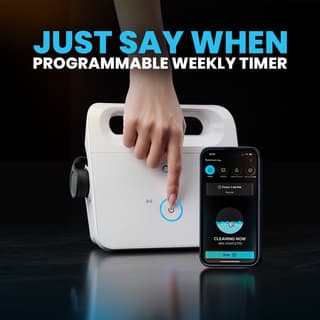
Zero setup friction. No cable to unwind, no power supply to shelter from splashes, nothing to coil up afterwards. You lift the robot, drop it in, and walk away — and that convenience is why cordless owners run their robots more often.
Awkward pool layouts. Cable length dictates how far a corded robot can reach from its power point. Pools with limited poolside outlets, long runs from the equipment pad, or a lot of furniture in the way are genuinely easier with a battery.
Surface skimming and AI navigation. The features cordless brands compete on are real. Flagship Beatbot models skim floating debris off the water surface before it sinks, map the pool with AI and sonar, and park themselves at the waterline for retrieval. No corded robot in our range skims the surface.
The cable question, honestly
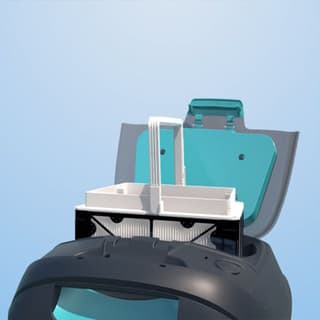
Tangling is the objection we hear most, and it's mostly a solved problem on quality machines. Premium corded robots use an anti-tangle swivel that lets the cable rotate freely rather than twisting into knots as the robot turns. Feed out only as much cable as your pool actually needs, let the robot do its thing, and knots stop happening.
What the swivel doesn't fix is the handling: you still walk a wet cable back to storage. That's the honest cost of the cable, and it's small — but it's every single cycle, which is exactly why some owners pay more to avoid it.
Battery life and the long-term cost
A cordless robot's battery is a consumable, like brake pads. Capacity fades with charge cycles, so a robot that comfortably finished your pool in year one may need a second run by year four. Replacement is possible on quality models, but it's a real cost that a corded robot simply never incurs.
Charging habits help. Don't leave the pack at zero over winter, store the robot shaded and dry rather than baking on the deck, and follow the manufacturer's off-season charge guidance. Our pool closing guide covers off-season storage for both types.
A note on safety
There have been reports of lithium-ion battery fires involving some budget cordless pool cleaners. Corded robots have no battery to overheat — the low-voltage supply is inherently the safer architecture. We only stock cordless brands that invest properly in cell quality, charge management, and thermal protection, and we'd rather steer you away from a bargain cordless robot than sell you one.
Strengths and tradeoffs
Corded advantages
- Constant, full-strength suction for the whole cycle
- No run-time limit and no recharging
- Bigger filters and leaf-bag options
- More cleaning per dollar
- No battery to degrade — often 8-10+ years
Cordless advantages
- Nothing to feed in, position, or coil up
- Works around awkward layouts and outlet placement
- AI and sonar navigation on flagship models
- Surface skimming on the top Beatbot cleaners
- Self-parks at the waterline for easy retrieval
Which should you buy?
Go corded if… your pool is 40 feet or longer, you deal with real leaf volume, you want maximum cleaning per dollar, or you plan to keep the robot for a decade. Start with the Dolphin Quantum for all-around value or the Premier for leaves.
Go cordless if… the cable is genuinely what has put you off, your pool is small to medium, or your poolside power situation makes a corded run awkward. The Dolphin Liberty 300 is where we'd start — it's the cordless robot we sell and support directly. If surface skimming is what you're after, the Beatbot AquaSense line does it, though we don't sell Beatbot ourselves.
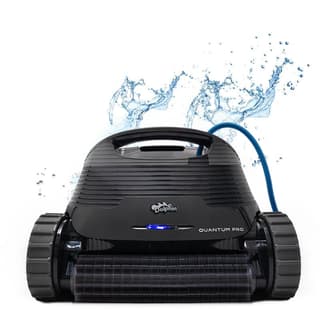
Dolphin Quantum
$1649.00
Dual high-output motors, the XXL MaxBin top-load filter, and full floor-to-waterline coverage on pools up to 50 feet — our no-regrets corded pick.
View Details → Free shipping · 30-day returns
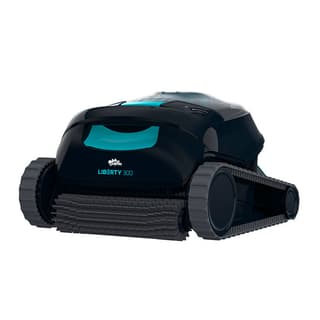
Dolphin Liberty 300
$0.00
Cable-free Maytronics cleaning with magnetic charging, click-up retrieval and full floor-and-wall coverage — the cordless robot we sell and stand behind.
See Details → Free shipping · 30-day returns
Our verdict
Corded is the better machine; cordless is the better experience. If you judge on cleaning results, filter capacity, and how many seasons the robot survives, buy corded — it isn't close. If the cable is the reason your last cleaner sat unused, pay the premium for cordless without guilt, keep the pool on the smaller side of the model's rating, and treat the battery as the part you'll eventually replace.
Not sure which side you fall on? Take our 60-second quiz for a personalized recommendation, or read are cordless pool cleaners worth it? for the longer version of this argument. Free shipping and 30-day returns apply either way.