

Pool cleaners come in three types — suction, pressure, and robotic — and they are not three versions of the same machine. If you're weighing a robotic pool cleaner vs suction or pressure models, here's the short version: suction and pressure cleaners borrow power from your pool's pump and plumbing, while a robot is fully self-contained with its own motors and its own filter. We've run all three types on real pools since 2011 — more than 70 robots hand-tested — and robotic wins for most pools on cleaning quality, running cost, and pump wear. The other two win on sticker price alone. Here's the honest breakdown.
Key takeaways
- Suction cleaners: cheapest to buy, but they run off your pump for hours and send every leaf to your pool filter.
- Pressure cleaners: carry their own debris bag, but many need a booster pump — the most energy-hungry way to clean a pool.
- Robotic cleaners: self-contained motors and filtration, floor-to-waterline scrubbing, pennies per cycle to run.
- The running-cost gap is the number most buyers miss — it quietly erases the sticker-price advantage within a few seasons.
- For most pools, robotic is the right call; the honest exceptions are listed below.
The three types of pool cleaners, explained
All three types share one goal — get debris off your pool surfaces — but they draw their power from very different places. A suction cleaner attaches to your skimmer or a dedicated suction line and is driven by your main pump pulling water through it. A pressure cleaner connects to a return line and is driven by water being pushed back into the pool, often with the help of a dedicated booster pump. A robotic cleaner ignores your plumbing entirely: it carries its own low-voltage motors, brushes, and onboard filter, and plugs into a standard outdoor outlet.
That single design difference — where the power comes from — explains nearly every difference in cost, cleaning quality, and equipment wear that follows. Keep it in mind as you read; the rest is details.
How suction pool cleaners work — and what they really cost
A suction cleaner is essentially a wandering vacuum head. Your pump's suction pulls water through the unit, which inches around the floor on a semi-random path, and everything it swallows travels up the hose to your pump basket and pool filter. Upfront, it's the cheapest type by far — which is exactly why it's so common.
The catch is everything downstream. The cleaner only works while your pump runs, so it adds hours of pump runtime to every cleaning day. All that debris loads your pool filter, which means more frequent backwashing or cartridge cleaning, and while the cleaner is attached it's borrowing suction your skimmer would otherwise use. Coverage is floor-focused and unguided — fine for light dust in a small, simple pool, but the walls and waterline stay your job, and a heavy week of leaves can clog a suction line entirely.
Fair is fair: for a simple pool, light debris, and a very tight budget, a suction cleaner beats a pole and hose. It's just a long way from hands-off, and it isn't as cheap as it looks once your power bill and filter cleanings absorb the difference.
How pressure pool cleaners work — and when they make sense
Pressure cleaners flip the plumbing around: water pushed back toward the pool drives the unit, and a venturi effect lifts debris into an attached bag. That bag is the type's genuine advantage over suction — big leaves and acorns end up in the bag instead of your pool filter. The trade is that the most capable pressure cleaners require a dedicated booster pump: extra plumbing, another motor drawing serious power every session, and one more piece of equipment to maintain over the years.
Cleaning quality lands in the middle. The bag is coarse, so fine dirt passes through and resettles; sweep tails stir up silt as much as they capture it; and wall coverage is limited. Where pressure cleaners make sense: a pool that's already plumbed for one, with heavy large-leaf debris, owned by someone who wants to keep using the infrastructure they've got. If you're starting from scratch, we would never point you here first — you'd be paying to install yesterday's system.
How robotic pool cleaners work
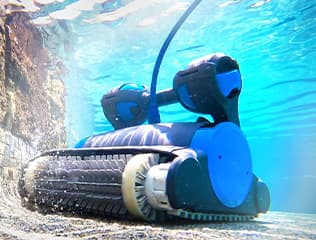
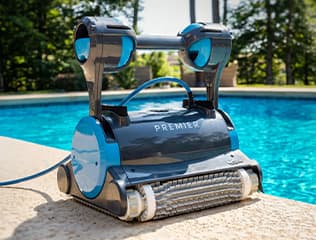
A robotic cleaner is a self-contained machine. A low-voltage power supply feeds a drive motor that steers the robot along software-planned paths, while a separate pump motor pulls water through an onboard filter — and spinning brushes scrub ahead of the intake the whole time. Nothing connects to your pump, filter, or plumbing. You drop it in, press start (or let a weekly schedule run it), and lift it out when it's done.
Because the robot carries its own filtration, debris ends up in a basket you rinse in a minute — not in your pool filter. And because it drives instead of drifting, a good robot climbs the walls and scrubs the waterline, the two jobs no suction or pressure cleaner does well. Fine onboard media even polishes the water a little with every pass.
Robotic vs. suction vs. pressure: side by side
| Suction | Pressure | Robotic | |
|---|---|---|---|
| Upfront cost | Lowest | Mid — booster pump adds more | Highest |
| Cost to run | High — hours of pump runtime | Highest — booster pump every session | About a nickel per cycle |
| Filtration | None of its own — loads your pool filter | Coarse bag catches big debris only | Onboard, down to ultra-fine |
| Wall & waterline cleaning | Limited, floor-focused | Limited | Full floor, walls & waterline |
| Wear on your equipment | Adds pump hours and filter load | Booster pump and plumbing to maintain | None — fully self-contained |
The running-cost math most buyers miss
Sticker price is the number you see; running cost is the number you live with. Suction and pressure cleaners only clean while pumps run, and pool pumps are among the biggest electricity users in a typical home — so the "cheap" cleaner quietly bills you every month, all season, on top of extra filter cleanings and backwash water. A booster pump stacks a second motor on top of that.
A robot draws about as much power as a laptop and finishes a full cycle in a couple of hours — roughly a nickel of electricity per cycle, or well under a dollar a month for most owners. Over a five-year span, it's common for the total cost of a mid-range robot, purchase price included, to undercut a pump-driven cleaner once energy and filter wear are counted — while cleaning dramatically better the entire time. The cheapest cleaner to buy is rarely the cheapest cleaner to own.
Which type of pool cleaner is right for you
- Choose suction if the budget is genuinely tight, your pool is small and simple, debris is mostly dust and fine dirt, and you don't mind the extra pump hours and filter cleanings that come with it.
- Choose pressure only if your pool is already plumbed with a booster line and your main battle is heavy, large leaves — the bag will spare your filter, even if fine dirt stays behind.
- Choose robotic for everything else — which, after matching cleaners to pools since 2011, we can tell you is most inground pools and every above-ground pool whose owner wants the chore gone. Buried in oak leaves? There are robots built specifically for that — see our picks for heavy leaves.
When suction or pressure is still the right answer
We sell robots, so take this in the spirit it's offered: there are pools where the older technologies still make sense.
A pressure cleaner already plumbed in. If your pool was built with a dedicated pressure line and booster pump, that infrastructure is paid for. Replacing a working pressure cleaner purely for efficiency rarely pays back quickly — wait until it fails, then switch.
Very heavy, very large debris. Pressure cleaners with large collection bags handle acorns, twigs, and gravel volumes that fill a robot's basket mid-cycle. In a yard producing that much heavy debris, a pressure cleaner as the first pass has a real argument.
Rental or seasonal properties where nobody empties anything. A suction cleaner routes debris to the pump basket, which someone is emptying anyway. A robot needs its own filter cleaned, and a robot whose filter is never emptied is worse than no robot.
A genuinely tight budget for a small pool. A basic suction cleaner costs a fraction of any robot. It's slower, it taxes your pump, and it doesn't scrub — but on a small pool with a healthy pump, it does clean the floor.
Outside those cases, the math favors robots at essentially every price point — which is what the rest of this comparison is about.
Why robotic wins for most pools
Add up what actually matters. A robot cleans floor, walls, and waterline instead of just the floor. It filters debris into its own fine basket instead of your pool filter. It costs pennies per cycle instead of hours of pump runtime. And it puts zero additional wear on the equipment that keeps your pool alive. That's the whole case — and it's why the robots we sold a decade ago are still the cleaners those customers reach for today.
If you're switching from a suction or pressure cleaner, you don't need a top flagship to feel the difference on day one. The Dolphin S200 delivers full floor-walls-waterline coverage right around a thousand dollars, and the Quantum adds flagship power and an XXL fine basket if you want the last word in value.
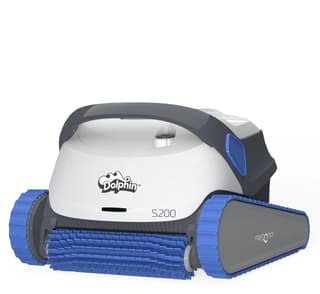
Dolphin S200
$999.00
Full floor, wall, and waterline coverage with an easy top-load basket — the affordable way out of pump-driven cleaning.
View Details → Free shipping · 30-day returns
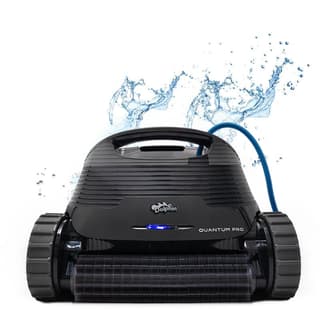
Dolphin Quantum
$1649.00
Flagship-grade power and an XXL fine filter basket — the robot we recommend most to owners upgrading from suction or pressure cleaners.
View Details → Free shipping · 30-day returns
The next step
Our verdict
Robotic cleaners win because they're independent: their own motor, their own filter, their own power supply, and no claim on your pump. Suction cleaners are cheap to buy and expensive to run in pump hours. Pressure cleaners handle heavy debris but need infrastructure most pools don't have. Unless you already own the plumbing for a pressure cleaner, a robot is the better machine at nearly every budget.
You now know the types — the last step is matching a specific robot to your specific pool. Our 60-second Help Me Choose quiz narrows 70+ tested models by pool type, size, surface, and debris, or you can start with our ranked best robotic pool cleaners list and our full how-to-choose guide. Either way, every robot ships free with 30-day returns and a full manufacturer warranty.
