

For most pool owners, yes — robotic pool cleaners are worth it. A good robot replaces 30–60 minutes of manual vacuuming and brushing every week, runs on roughly a nickel of electricity per cycle, filters your water independently of the pump, and lasts 5–8 years with basic care. We've been selling and hand-testing robotic pool cleaners since 2011 — more than 70 models on real pools, more than 10,000 pool owners helped — so we've watched this math play out thousands of times. But "most" is not "all." Here's the honest cost-benefit breakdown, including the cases where we'd tell you to keep your money.
Key takeaways
- Worth it for most pools: a robot pays you back in time, energy, and chemical savings, and keeps doing it for 5–8 years.
- Cheap to run: expect pennies per cleaning cycle, versus hours of pump runtime for suction and pressure cleaners.
- It's a second filter: a robot scrubs and filters independently, easing the load on your pump, filter, and sanitizer.
- Not for everyone: tiny seasonal pools and surface-debris problems are often better served by a skimmer or a simple manual vacuum.
- Spend where it counts: wall climbing, filtration quality, and warranty length are what separate the price tiers.

What a robotic pool cleaner actually replaces
The honest way to answer "are robotic pool cleaners worth it" is to list what disappears from your week when one arrives. Manual vacuuming means assembling a telescopic pole, hooking a hose to the skimmer, priming out the air, and pushing a vacuum head across the floor for half an hour or more — then brushing the walls and waterline separately, because a manual vacuum doesn't scrub anything. Most pools need that routine once or twice a week, all season long.
A robot replaces the entire ritual. You place it in the water, press a button (or let a weekly timer start it), and lift it out when the cycle ends. Two or three cycles a week keeps a typical pool spotless, and your total involvement is emptying a filter basket — about two minutes. Across a six-month season, that's dozens of hours returned to you.
It's the single biggest reason the robots we sell get used year after year instead of gathering dust in a shed: they remove a chore completely rather than making it slightly easier. If you're comparing against a suction or pressure cleaner instead of a pole and hose, the time savings are smaller but the cost savings are bigger — more on that next.
Running costs: pennies per cycle
Robotic cleaners run on a low-voltage power supply that plugs into a standard outdoor outlet, and the robot itself draws about as much power as a laptop. In most areas that works out to roughly a nickel's worth of electricity per cleaning cycle. Run it every other day for an entire season and the impact on your power bill is a few dollars — not hundreds.
Compare that with the pump-driven alternatives. Suction cleaners only move while your main pump runs, so they quietly add hours of high-draw pump runtime to every cleaning day. Pressure cleaners often require a dedicated booster pump on top of that. A robot is fully self-contained — its own drive motor, its own vacuum motor, its own filter — so it cleans without touching your pool's plumbing or your pump's schedule at all. Over a five-year stretch, that difference alone can quietly repay a large chunk of the robot's purchase price.
Why robotic pool cleaners are worth it beyond the clean floor
Three benefits that never show up on a spec sheet but show up in your pool:
A second, finer filter. Every cycle, a robot pulls water through its own onboard filter — on the models we recommend, down to ultra-fine media that traps silt, pollen, and dust your main filter often lets recirculate. Your water gets polished a little with every run, with no backwashing and no added filter load.
Less chemical demand. Leaves and dirt left on the floor break down, feed algae, and consume your chlorine while they do it. A robot removes debris before it decays and scrubs the surfaces where algae takes hold first, so your sanitizer works on the water instead of the mess. Balanced water with fewer shock treatments is the pattern we hear about constantly from long-term robot owners.
Less wear on your main system. Every leaf a robot captures is a leaf your pump basket and pool filter never see. Over the years that means fewer backwashes, longer filter media life, and the option to run shorter pump schedules — small savings that compound quietly.
What you get at each price tier
Robotic cleaners span roughly $400 to $2,400, and the jumps between tiers are not arbitrary — each one adds specific capability:
| Price tier | Typical pool | What you get | What you give up |
|---|---|---|---|
| $400–$700 | Above-ground to 33 ft | Strong floor cleaning, top-load basket, no hoses or boosters | Wall and waterline climbing |
| $700–$1,200 | Most inground pools | Floor, wall, and waterline coverage, fine filter baskets | Premium filtration, smart features |
| $1,500–$2,400 | Inground, no compromises | Multi-media or 1-micron filtration, timers, app control, gyroscope navigation, 3-year warranties | Nothing but budget |
Under $700 buys a legitimate robot for above-ground pools — not a toy. The Dolphin Escape is the one we recommend most in this bracket: commercial-grade motor DNA, aggressive HyperBrush scrubbing, and a top-load basket that empties in seconds. See everything at this level in our under-$700 lineup.
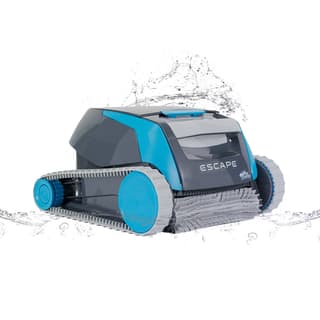
Dolphin Escape
$768.00 $899.00 Save 15%
Commercial-grade floor cleaning for above-ground pools up to 33 feet — proof that worth it does not have to mean expensive.
View Details → Free shipping · 30-day returns
$700–$1,200 is where owners of inground pools should start looking, because this tier adds the wall and waterline climbing that eliminates brushing — the second chore. Robots like the Dolphin S200 cover floor, walls, and waterline with easy top-load fine baskets and solid two-year warranties.
$1,500–$2,400 is flagship territory, and it's where the value math surprises people. The Dolphin Quantum delivers flagship coverage and an oversized fine basket for hundreds less than the top models, while the Premier adds interchangeable multi-media filtration and a three-year warranty. Torn between those two? Here's our Premier vs. Quantum comparison.
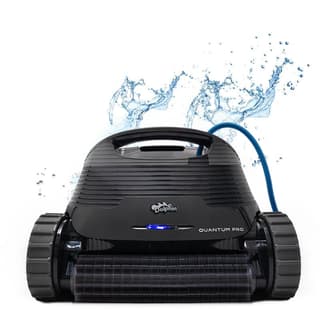
Dolphin Quantum
$1649.00
Flagship coverage and fine filtration at a price that makes the worth-it math easy — the robot we recommend most often.
View Details → Free shipping · 30-day returns
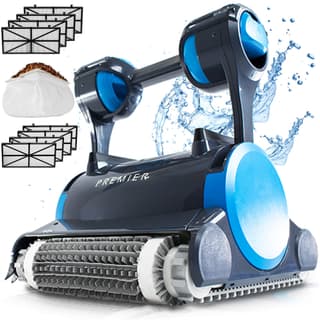
Dolphin Premier
$1999.00 $2499.00 Save 20%
Dual commercial-grade motors, swappable multi-media filtration for every debris season, and a 3-year warranty — the strongest long-term value we sell.
View Details → Free shipping · 30-day returns

How to make the math work harder
Three levers move the payback period, and none of them involve buying a lesser robot.
Buy open-box or refurbished. Inspected, repackaged units carry the same full manufacturer warranty and routinely save several hundred dollars — often enough to move you a whole tier up. A refurbished flagship beats a new mid-tier robot on every spec that matters. Stock rotates constantly, so it's worth checking open-box and refurbished availability before you settle on a new unit.
Buy for the pool you have, not the one you might build. Paying for a robot rated to 50 feet when your pool is 28 feet buys you nothing but a faster cycle. Paying for gyroscope navigation on a plain rectangle is the same. Match the coverage and filtration to your actual debris and pool shape — our 60-second quiz exists precisely to stop this kind of overspend.
Buy off-season if you can wait. Demand — and therefore pricing and open-box supply — follows the swim season. A robot bought in late fall costs less and sits ready for opening day.
Pros and cons after fifteen summers of testing
Here's the honest ledger, based on testing 70+ robots and servicing what we sell:
What we love
- Removes vacuuming and most brushing from your week entirely
- Pennies per cycle to run — no pump runtime, no booster pump
- Independent fine filtration that visibly polishes water
- Less debris decay means lower chemical demand
- Spares your pump and filter years of extra wear
- Quality models last 5–8 years and carry 2–3 year warranties
What could be better
- Meaningful upfront cost — good inground robots start around $1,000
- You still empty and rinse the filter basket after cycles
- Corded models require basic cable management
- It cleans the pool; it does not balance your water chemistry
- Overkill for very small or seasonal soft-sided pools
The cons are real, but notice what they are: cost, a two-minute basket habit, and managing a cord. The pros are hours of your life and years of equipment health. That asymmetry is the whole argument.
When a robotic pool cleaner is not worth it
We sell robots, and we'll still tell you there are pools that don't need one.
Very small or seasonal pools. If you set up a soft-sided pool each June and drain it by September, an inexpensive manual vacuum honestly covers it. A robot would clean better, but the payback period is longer than the pool's season.
Your only problem is floating debris. Robots clean the floor, walls, and waterline — they don't patrol the surface. If leaves land in your pool but rarely sink, a solar-powered skimmer like the Betta SE Plus solves your actual problem for far less money.
The budget genuinely isn't there. A no-name bargain robot that dies in its second summer is worse than no robot — you pay and still end up back on the pole. If flagships are out of reach, buy proven hardware at the affordable end instead: the Escape, or the open-box and refurbished deals in our budget section, all with full warranties.
Someone else already cleans your pool. If weekly service is baked into HOA fees you can't drop, a robot mostly buys you better between-visit clarity. Nice to have — not essential.
The lifespan math: buy once, clean for years
The robots that come back to us for service tell a consistent story: quality corded robots last 5–8 years with basic care, and the care is genuinely basic. Rinse the filters after cycles, take the robot out of the water when it finishes — leaving robots in the pool 24/7 is the fastest way to age seals and plastics — and store it out of direct sun. Our maintenance guide covers the whole routine in about five minutes of reading.
Now run the numbers. Spread a flagship's price across six seasons and you're paying a few hundred dollars a year — less than many owners spend on one or two months of professional service — for a machine that cleans every other day. Spread the Escape across five seasons and it costs less per summer than a patio umbrella. And because everything we sell carries a full manufacturer warranty with free shipping and 30-day returns, trying one carries very little risk.
Our verdict after 15 years
Our verdict
Robotic pool cleaners are worth it for the overwhelming majority of pools. They hand back hours every month, cost pennies to run, and quietly improve water quality and equipment life for 5–8 years. Skip one only if your pool is tiny and seasonal, or your real problem is floating surface debris.
The fastest way to find out which robot fits your pool is our 60-second Help Me Choose quiz — answer five quick questions and we'll narrow 70+ tested models down to your best match. Prefer to browse? Start with our ranked best robotic pool cleaners and work from the top.
