

Here's the honest answer: a quality corded robotic pool cleaner lasts 5 to 8 years, premium models like the Dolphin Premier routinely go longer, and budget or cordless robots usually bow out sooner. But that range is wide for a reason — how you treat a pool robot matters more than almost anything on its spec sheet. We've been selling and servicing robotic pool cleaners since 2011, and the robots that come back to our bench early almost always failed for the same handful of preventable reasons. Below is what lifespan really looks like by type, what kills robots ahead of schedule, and the habits that double their working lives.

Key takeaways
- Expect 5–8 years from a quality corded robot — and premium Dolphins often clear that with room to spare.
- Cordless caveat: battery capacity fades within 3–5 years of regular use, even when the robot itself is fine.
- The four killers: living in the pool 24/7, sun-baked cables, clogged filters, and unbalanced water.
- Care pays double: rinsed filters, shaded caddy storage, and gentle cable habits are the difference between 4 years and 8.
- Don't scrap early: power supplies, cables, brushes, and filters are all replaceable parts.
How long do robotic pool cleaners last on average?
Five to eight years is the honest average for a quality corded robot that gets reasonable care — a number we stand behind after fifteen years of selling these machines and servicing what we sell. "Lasting" here means the expensive parts — motors, drive systems, electronics, seals — stay healthy. Wear items like brushes, tracks, and filter media are consumables, like tires on a car; replacing them along the way is normal ownership, not failure.
Build quality moves you inside that range, and warranty length is the giveaway. The robots backed by 3-year warranties are the same ones we most often see still running at year eight, because motor, bearing, and seal quality is exactly where cheaper robots quietly save money. Meanwhile the price of neglect is steep: the difference between a robot that dies at year three and one cruising at year eight is usually the owner's habits, not the factory's.
One more variable worth naming is workload. A robot running a few scheduled cycles a week in a screened, low-debris pool logs easier miles than one grinding through oak leaves and construction dust every single day — same machine, very different decade. Match the robot to the job and neither of you suffers.
How long do robotic pool cleaners last by type?
| Robot type | Typical lifespan | The usual limiter |
|---|---|---|
| Budget robots (under about $500) | 2–4 years | Light-duty motors, seals, and short warranties |
| Quality corded (most Dolphins) | 5–8 years | Wear items first; motor block eventually |
| Premium corded (Premier, Sigma) | 8+ seasons with care is common | Slow, graceful wear |
| Cordless robots | 5–7 years for the robot | Battery capacity fades in 3–5 years |
The cordless line deserves the asterisk. A lithium battery is good for a few hundred full charge cycles, so a cordless robot used several times a week starts losing meaningful runtime within a few seasons — the robot is fine, but it cleans less pool per charge. Where batteries are replaceable, that's an added cost; where they aren't, the battery is the lifespan. It's one of the main reasons we point most owners toward corded robots — the full reasoning is in our corded vs. cordless comparison.
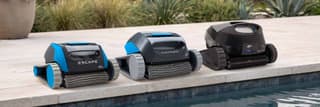
What kills pool robots early
Our service bench sees the same four stories on repeat. Avoid these and you've avoided most early deaths.
1. Living in the pool 24/7. It feels convenient to leave the robot in the water between cleans. It's also the single fastest way to age one. Chlorinated water and direct sunlight attack seals, plastics, and the cable jacket around the clock — even when the robot isn't running. The robots we see with brittle housings and corroded connectors at year three are almost always full-time pool residents.
2. Sun-baked cables. A cable draped across hot concrete all summer dries out, cracks, and stiffens at the swivel — and cable damage is one of the most common failure points on any corded robot. Loosely coil it in the shade after each cycle, and never drag or lift the robot by its cable. If the jacket ever cracks deeply enough to show what's inside, stop using the robot and have the cable replaced — water intrusion follows quickly.
3. Clogged filters. A blinded filter forces the motors to pull water through a wall. They run hot, strain, and wear early — and the robot cleans badly the whole time. A sixty-second rinse after each cycle is the cheapest motor insurance you can buy.
4. Unbalanced water. Chronically high chlorine, lingering shock levels, and low pH chew through O-rings, seals, and housings. Let shock treatments settle back to normal levels before running the robot, and keep your chemistry balanced — your liner and heater will thank you along with the robot.
Six habits that double a robot's lifespan
- Rinse the filters after every cycle. Fresh water from the hose, ten seconds per panel or basket. Clean media keeps flow high and motors cool — and swap in fresh media when yours wears; fine filters like NanoFilters are inexpensive to replace.
- Take the robot out between cleans. Run it as often as you like — daily is fine — but let it live outside the water.
- Store it in the shade on a caddy. Off the hot deck, cable managed, out of the sun. A caddy is the difference between "stored" and "piled."
- Baby the cable. Unspool it fully before each cycle, coil it loosely following its natural memory afterward, and pull the robot out by the handle, never the cord.
- Keep water balanced. Test weekly. Balanced water is gentler on every seal and surface the robot owns.
- Winterize indoors. Rinse everything, dry it, and store the robot frost-free for the off-season — never in the pool under a winter cover.
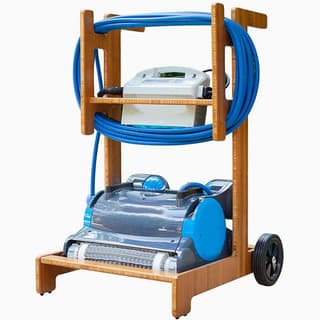
Terra Premium Caddy
$249.00
Shade storage on wheels — holds the robot and power supply off the hot deck with UV protection, which is exactly the storage habit that stretches lifespan.
View Details → Free shipping · 30-day returns
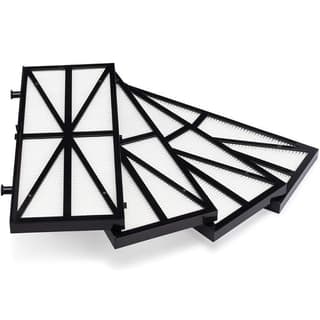
Dolphin Premier NanoFilters
$109.00
Worn, clogged media makes motors work hot. Fresh ultra-fine filters restore flow, protect the drive system, and bring back that just-unboxed water polish.
View Details → Free shipping · 30-day returns
The full routine — including saltwater rinsing and seasonal checklists — is in our robot maintenance guide.
What warranties tell you about lifespan
Warranty length is the manufacturer's own bet on its build quality, which makes it one of the most honest specs on the page. Flagships like the Dolphin Premier carry 3-year warranties; budget robots often carry a fraction of that. That gap tells you what the engineers expect from their seals and motors.
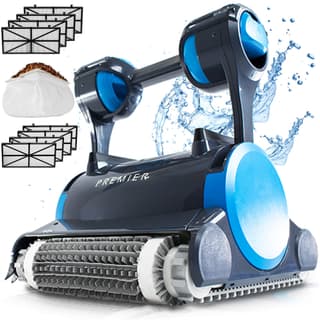
Dolphin Premier
$1999.00 $2499.00 Save 20%
Our best-overall robot is also one of the longest-covered — commercial-grade dual motors and a 3-year warranty from Maytronics, the kind of build we routinely see running strong past year eight.
View Details → Free shipping · 30-day returns
Every robot we sell ships with its full manufacturer warranty — the details live on our warranty information page. Two tips to keep coverage drama-free: register your robot when it arrives, and follow the care basics above, since warranties cover defects, not neglect. Keep your receipt and a photo of the serial number filed together — five minutes now makes any future claim painless.
Repair or replace? How to decide
Here's the part that saves people real money: quality robots are modular. Power supplies, cables, brushes, tracks, impellers, and filters are all replaceable — a genuine replacement power supply revives the most common "my robot is dead" scenario without touching the robot itself. Before assuming the worst, walk through our troubleshooting guide; a surprising share of "dead" robots turn out to be a clogged filter, a tripped outlet, or a loose cable connection. And the power supply is the usual suspect for a reason — it lives out on the pool deck taking weather all year while the robot gets put away.
Our rule of thumb from the service bench: if the robot is under about five years old and the fix is a bolt-on part, repair it. If an aging robot needs a motor block — the heart of the machine — put that money toward a new unit instead. You'll get current navigation and filtration, plus a fresh multi-year warranty, which an old repair can never offer.
The parts that wear, and when to expect them
Nothing on this list is a failure — it's a service schedule. Knowing it stops owners from writing off a healthy robot at year four.
| Part | Typical service life | Symptom when it's due |
|---|---|---|
| Filter media / cartridges | 1–3 seasons | Suction drops even after rinsing; media won't come clean |
| Brushes | 3–4 seasons | Robot still runs but leaves a film; waterline stops coming clean |
| Tracks or wheel treads | 4–6 seasons | Slipping on walls; robot stops climbing reliably |
| Impeller | 5+ seasons | Noisy running, weak suction with clean filters |
| Cable | 5+ seasons, or sooner if coiled tightly | Intermittent power, stiff or chalky jacket sections |
| Power supply | 5–8 seasons | No power at all; the most common "dead robot" cause |
| Motor unit | Usually outlives the robot | Rare, and the one case where replacement beats repair |
The pattern worth noticing: everything above the motor line is a consumable you can replace yourself for a fraction of a new robot's price. A machine that "isn't cleaning like it used to" at year four is almost always asking for brushes and media, not retirement.
Buy once, care a little, swim for a decade
The bottom line
Five to eight years is the honest average, and almost all of the variance is owner behavior rather than brand. Robots that live in the pool full-time, get stored in direct sun, or run on filters that are never properly rinsed die early. Robots that come out after every cycle, get a freshwater rinse, and sit shaded on a caddy routinely pass a decade — on parts you can replace yourself for a fraction of a new machine.
The formula is short: buy a quality corded robot, rinse the filters, store it shaded on a caddy, and keep your water balanced — and 5 to 8 years becomes a floor, not a ceiling. If you're choosing your next long-hauler, start with our best robotic pool cleaners or take the 60-second Help Me Choose quiz and we'll match you with a robot built to go the distance. We've helped 10,000+ pool owners do exactly that — free shipping, 30-day returns, and full manufacturer warranties included.
