

What does pool maintenance cost in 2026? For most US homeowners, weekly professional service lands between $100 and $150 per month during swim season, while doing it yourself runs $30-$60 a month in chemicals plus modest electricity and the occasional replacement part. Stretch those numbers over five years and the gap widens into thousands of dollars. We've spent fifteen years helping more than 10,000 pool owners think through these budgets, so here's the honest breakdown — what service really includes, what DIY really costs, and where a robotic pool cleaner quietly changes the math.
Key takeaways
- Weekly service: $100-$150 per month in most metros, billed year-round in southern climates.
- DIY: $30-$60 a month in chemicals, plus $30-$80 in pump electricity.
- Equipment is the hidden budget: startup gear up front, and pumps, filters, and liners eventually.
- A robot shifts the equation: it replaces the labor — the main thing a weekly service actually sells.
- Five-year picture: DIY plus a robot typically runs thousands less than full-service care.
Pool maintenance cost at a glance
Every pool is different — size, climate, tree cover, and equipment all move the needle — but after fifteen years in this industry, these are the ranges we see most often:
| Approach | Typical monthly (in season) | Typical yearly |
|---|---|---|
| Weekly full service | $100-$150 | $1,000-$1,800 |
| Chemistry-only service visits | $60-$100 | $500-$1,000 |
| Full DIY (chemicals + electricity) | $60-$140 | $400-$800 |
| DIY + robotic cleaner | $60-$140 | $400-$800, plus the robot up front |
The yearly figures depend heavily on season length. A pool in Phoenix or Orlando is a 12-month expense; a pool in Minneapolis is open five or six months and hibernates the rest of the year.
What a weekly pool service costs
A standard weekly service contract in most metros runs $100-$150 per month and covers a technician visit each week: testing the water, adjusting chemicals, skimming the surface, emptying baskets, brushing, and a quick equipment check. Some companies include chemicals in the price; many bill them separately, which can add $20-$40 a month in summer. Vacuuming is often "as needed" rather than every visit, and extras like filter deep-cleans, green-pool rescues, and opening or closing the pool are usually billed on top.
Two things push the number up: year-round climates (you're paying every month, not just summer) and pools with heavy debris load, which some companies surcharge. The service model's real product is convenience — you're paying someone roughly $1,200-$1,800 a year so you never think about the pool. Whether that's worth it depends entirely on what your Saturday hour is worth to you.
DIY pool maintenance costs, line by line
Do it yourself and the same pool costs a fraction in cash — you're just paying with time instead. Here's the realistic line-item budget for a typical residential pool in season:
| Expense | Typical range |
|---|---|
| Chlorine, pH adjusters, shock | $30-$60 per month |
| Test strips or reagent refills | $50-$100 per season |
| Pump electricity | $30-$80 per month |
| Parts and filter media (averaged) | $100-$300 per year |
The chemical line assumes a normal, balanced pool. A neglected pool costs multiples of that — one bad algae bloom can burn through a month's chemical budget in a weekend, which is why the cheapest habit in pool ownership is testing consistently and never letting the water slide.
Time is the honest fourth line item: plan on two to three hours a week while you're learning, shrinking to about an hour once the routine clicks — and considerably less if a machine handles the vacuuming.
One-time equipment costs to budget for
Whichever route you choose, there's a starter kit. DIY owners need all of it; service customers still usually want the basics for between-visit touch-ups:
| Item | Typical cost |
|---|---|
| Test kit or smart water monitor | $15-$450 |
| Telescopic pole, leaf net, brush | $50-$150 |
| Manual vacuum head, hose, and plate | $50-$150 |
| Robotic pool cleaner | $600-$2,400 |
| Solar or safety cover | $75-$400+ |
The robotic cleaner is the biggest line, and the one that changes everything else — so let's talk about it honestly.

Where a robotic pool cleaner changes the math
A robot doesn't make pool costs vanish; it converts a recurring labor cost into a one-time equipment cost. Three effects show up in real budgets:
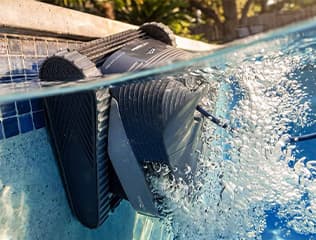
It replaces the labor you'd otherwise pay for. Vacuuming, wall scrubbing, and waterline cleaning are the sweat equity of pool care. Once a robot owns those jobs, many owners we work with drop from weekly full service to occasional chemistry-only visits — or to full DIY. If the robot lets you skip even half a season of weekly service, it has covered most of its own price. We walk through the full ownership math in are robotic pool cleaners worth it.
It lightens the load on your main filter. Everything a robot traps in its onboard basket is debris your pump and filter never process, which means fewer backwashes, less water and chemical loss, and longer filter media life.
It removes debris before it becomes chlorine demand. Leaves and organics consume sanitizer as they decompose. A pool that's physically clean simply needs less chemical intervention than one where debris sits and rots.
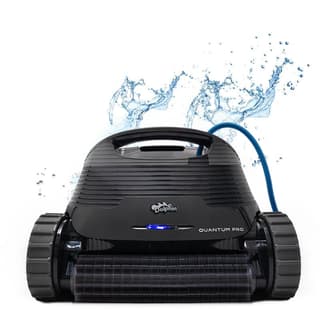
Dolphin Quantum
$1649.00
Flagship cleaning — floor, walls, and waterline on a weekly timer — at a price that undercuts a single year of full-service visits in most metros.
View Details → Free shipping · 30-day returns
You don't need a flagship for the math to work, either. There are excellent machines under $1,000, and our budget picks include open-box and refurbished units with full warranties. Running an above-ground pool? The equation is even friendlier:
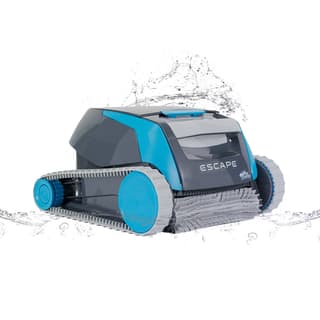
Dolphin Escape
$768.00 $899.00 Save 15%
Commercial-grade motor and top-load filter basket for above-ground pools up to 33 feet — under $700, no hoses, no booster pump.
View Details → Free shipping · 30-day returns
For a full breakdown of what robots cost by tier and what you get at each price, see how much does a robotic pool cleaner cost.
Pool maintenance cost over 5 years: three scenarios
Here's how the paths compare for a typical seasonal pool in a typical metro. These are illustrative estimates with loose ranges — your climate, pool size, and local rates will move them — but the shape of the comparison holds up everywhere we've checked it:
| Scenario | Rough 5-year total | Your weekly time in season |
|---|---|---|
| Weekly full service | $6,000-$9,000 | Under 30 minutes |
| Full DIY, manual vacuuming | $2,500-$4,000 | 2-3 hours |
| DIY + robotic cleaner | $3,200-$5,600 | 30-60 minutes |
A note on the assumptions: the service row uses $100-$150 a month over a six-to-seven-month billing window, the DIY rows use the chemical and electricity ranges above, and the robot row adds a one-time purchase in the $700-$1,600 band. Year-round climates raise every row — but they raise the service row fastest, because you're buying roughly 52 visits a year instead of 26.
The middle row is cheapest in cash and most expensive in Saturdays — figure several hundred hours of pool work over five summers. The bottom row is the one most of our customers land on: DIY-level spending with something close to service-level convenience, since a quality robot bought once typically serves the whole five-year window with basic care.
Money-saving habits that actually work
Whichever path you pick, the same habits keep the total down:
- Test your own water, even with a service. A $20 kit catches drift between visits before it becomes a rescue.
- Buy chemicals early in the season. Prices climb in mid-summer when demand peaks; stocking up in spring routinely saves real money.
- Right-size your pump runtime. Run it long enough for one full turnover a day — more is wasted electricity, less is a green-water invitation.
- Keep the water balanced. Corrosive or scaling water quietly destroys heaters, seals, and liners — the most expensive components you own.
- Cover the pool when it's idle. Less evaporation, less debris, less chemical loss, less heating cost.
- Rinse your robot's filters after each cycle. A two-minute rinse keeps suction at full strength and stretches the machine's life — the whole routine is in our maintenance guide.
- Fix small problems immediately. A dripping pump seal or a slow-creeping pH is a $20 fix today and a $500 fix in August.
Four ways pools get expensive quietly
The line items above are the predictable costs. These are the ones that arrive as a surprise bill, and all four are avoidable.
Running the pump too little. Undersized run times feel like savings and cost more than they save: poor circulation means more chemical demand, more algae recoveries, and cloudier water that takes days of extra filtering to fix. Turnover is not the place to economize — though a variable-speed pump running longer at lower speed genuinely is.
Chasing problems with chemicals. Pouring product at symptoms without testing first is how people spend hundreds of dollars a season on clarifier, algaecide, and shock that a $20 test kit would have made unnecessary. Test first, always.
Neglecting filter media. Media that's past its life doesn't announce itself — the water just quietly stops looking good, and the usual response is more chemicals. Replacing cartridges on schedule is cheaper than a season of compensating for them.
Letting the water go over a vacation. A week of no circulation in July is the most common route to a full algae recovery, which costs a weekend and a chunk of chemicals. A robot on a weekly timer plus a neighbor emptying the skimmer is very cheap insurance.
The bottom line
Pool maintenance cost in 2026 splits three ways: pay a service $1,000-$1,800 a year for convenience, pay $400-$800 in supplies and do the labor yourself, or split the difference — automate the cleaning with a robot and keep the spending near DIY levels without the Saturday shift. That last option is the one we'd choose, and the one most of our 10,000+ customers have. However you split the labor, remember that the pool doesn't care who does the work — only that it happens every single week.
The bottom line
The cheapest pool to own is the one that never gets behind. Weekly service buys convenience at roughly double the DIY cost; DIY buys savings at the price of your Saturdays. Automating the cleaning splits the difference — you keep DIY-level spending, drop the labor that people actually resent, and avoid the expensive recoveries that come from a pool left alone for a week.
Not sure which robot fits your pool and budget? Take the 60-second Help Me Choose quiz and we'll match you to the right machine — every robot ships free with 30-day returns and a full manufacturer warranty.
