

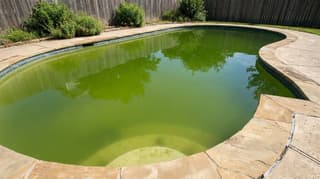
Green pool water means one of three things: algae (cloudy, slimy water — the most common cause by far), dissolved metals like copper (water stays clear but takes on a green tint), or pollen (a green film riding on the surface). Each one has a completely different fix — and using the algae fix on a copper problem actually makes it worse. We've helped more than 10,000 pool owners since 2011, and misdiagnosis is the number-one reason a green pool stays green. Here's how to identify your cause in minutes and clear it on a realistic timeline.
Key takeaways
- Diagnose before dosing: slimy and cloudy means algae, clear-but-tinted means metals, a surface film means pollen.
- Never shock a copper problem: oxidized copper darkens the water and can stain surfaces — use a metal sequestrant instead.
- Realistic timeline: a light tint clears in a day or two; a full bloom takes about five days done right.
- Drain only as a last resort: swamp conditions plus very high cyanuric acid are the main reasons to swap water.
- Prevention is a system: steady chlorine, real circulation, and scheduled robot cycles keep green from coming back.
What turns pool water green? The three causes
Before you buy a single chemical, spend one minute matching your symptoms:
| Clue | Likely cause | The fix |
|---|---|---|
| Walls feel slimy, water is cloudy | Algae | Shock, filter 24/7, vacuum |
| Water is clear but tinted green | Copper or other metals | Sequestrant — do not shock |
| Green dust or film on the surface | Pollen | Skimming plus fine filtration |
Get this step right and everything downstream gets easier. Get it wrong and you can spend a week of chemicals fighting the wrong enemy.
Cause 1: Algae — slimy, cloudy, and the most common
If the water is murky and the walls feel like a wet frog, you have an algae bloom. It almost always follows a sanitizer lapse: chlorine dipped during a heat wave, after a storm washed in debris, or after a busy swim weekend loaded the water with organics. Warm, still, unsanitized water is an algae greenhouse, and a bloom can go from invisible to unmistakable in a day.
Confirm it with a test — free chlorine will usually read at or near zero. And resist the single-scoop fix. One dose of shock lightens the water for a day, then the bloom rebounds, because algae protected by slime and settled debris needs the full kill sequence. Half-treatments are the most expensive kind. The cure is a proper kill sequence, not a single scoop of shock: balance pH, brush, shock by algae color, filter around the clock, then vacuum out the dead. We've written the complete playbook in our step-by-step guide to getting rid of pool algae, and the 5-day plan below shows how it maps to a calendar.
Cause 2: Copper and metals — clear water with a green tint
Here's the diagnosis pool stores miss constantly: if you can see the bottom clearly but the water looks like green glass, that's almost never algae. It's dissolved metal — usually copper. Classic sources include topping off with well water, copper-based algaecides, and low pH slowly corroding the copper heat exchanger inside a gas pool heater. A telltale side effect is blonde hair turning greenish after swimming.
Do not shock it. Chlorine oxidizes dissolved copper, which can shift the water darker and even stain your pool's surfaces. Instead, add a metal sequestrant per the label — it binds metals so they can't tint or stain — then fix the root cause: correct low pH, and get the fill water tested before it goes in the pool (basic test strips don't measure metals, so have a pool store run a metals test on a sample). In extreme cases, a partial drain and refill with metal-free water is the practical reset. If you're on well water for the long haul, make sequestrant part of the routine — a maintenance dose with every major top-off — and keep pH from dipping low so your heater's copper stays in the heater. Metal that never dissolves can't tint anything.
Cause 3: Pollen — the green film that isn't alive
Every spring we get the same calls: chlorine is perfect, the water tests fine, but a yellow-green film keeps collecting on the surface and in downwind corners. That's pollen. It blows in daily, floats, and is fine enough to slip through skimmer baskets and standard filter media — and since it isn't alive, no amount of chlorine makes it go away.
The fix is mechanical, not chemical: aggressive surface skimming plus filtration fine enough to actually hold the particles. A robot set up for pollen with NanoFilter-grade media traps what coarse baskets recirculate, and a dedicated surface skimmer catches pollen before it sinks. The good news is that pollen season is finite — set the robot to daily cycles for those few heavy weeks and the film never gets a chance to accumulate.
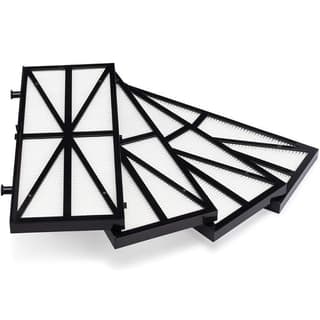
Dolphin NanoFilters
$109.00
Ultra-fine disposable media that drops into the Dolphin Premier and traps pollen and silt that standard cartridges let sail through. The cheapest fix for spring's green film.
View Details → Free shipping · 30-day returns
How bad is it? The green pool severity scale
For algae-green pools, the shade tells you the timeline. Be honest about where you are — underestimating the stage is how people end up shocking four weekends in a row.
| Stage | What you see | Typical recovery |
|---|---|---|
| Light tint | Water slightly dull green, bottom visible | 1–2 days |
| Cloudy green | Murky water, bottom blurry | 2–3 days |
| Dark green | Can't see the shallow-end floor | 3–5 days |
| Swamp | Black-green, debris, possibly wildlife | 5–7+ days, or drain |
One safety note that applies to every stage past a light tint: if you can't see the main drain, nobody swims. Murky water is a rescue-visibility problem, not just a cosmetic one.
The 5-day green pool recovery plan
This is the schedule we give pool owners for a solid cloudy-green to dark-green bloom. Lighter pools finish early; swamps run longer.
| Day | Focus | What to do |
|---|---|---|
| 1 | Kill | Test, lower pH to 7.2–7.4, brush everything, double-shock at dusk, filter 24/7 |
| 2 | Kill again | Retest, re-shock if still green, brush again, backwash as pressure climbs |
| 3 | Clear | Water turns gray-cloudy (dead algae), keep filtering, brush, start vacuuming |
| 4 | Remove | Vacuum out settled dead algae, deep-clean or backwash the filter |
| 5 | Polish | Full retest, rebalance, final fine-filtration pass, swim when clear and 1–3 ppm |
Two notes from experience. First, day 3's gray water discourages people — don't stop, gray means winning. Second, day 4 is where fine filtration earns its keep: dead algae is a powder that coarse baskets simply recirculate, which is why we point owners at robots built for dead algae for the removal phase. If the water is blue but stubbornly hazy on day 5, our cloudy water guide covers the last mile. Once the water passes the eye test, finish with a deep filter clean — backwash thoroughly, or give cartridges a chemical soak — and hold swimmers out until free chlorine settles back into range.

When draining beats treating
Chemistry recovers almost every green pool, but two situations justify swapping water instead:
- Cyanuric acid far above 100 ppm. Years of stabilized chlorine pucks push CYA sky-high, and past a point it buffers chlorine so hard that shocking barely works. Diluting with fresh water is the only real fix — and it's why we steer owners toward liquid chlorine or cal-hypo once CYA crests the range, since unstabilized chlorine adds no CYA.
- True swamp conditions. If the pool sat for a season, you can't see the bottom, and there's a layer of debris, the chemical-and-labor math often favors a drain and scrub.
One serious caution: never fully drain a pool on a whim. Groundwater pressure can lift an empty inground shell right out of the ground, and liners shrink fast. Partial drain-and-refill cycles are the safe DIY move; leave full drains to a professional.
How to keep green pool water from coming back
A pool that went green once will do it again unless something changes. The fix is boring consistency:
- Test 2–3 times a week in season so chlorine never silently hits zero — our pool water testing guide shows what to check and in what order.
- Run the pump 8–12 hours a day in summer; still water is algae's best friend.
- Schedule robot cycles 2–3 times a week to brush surfaces and strip out the organic debris blooms feed on.
- Keep organic debris out. Skim in leaf season and empty baskets weekly — rotting debris consumes chlorine and feeds the next bloom.
- Add UV. A UV-equipped robot neutralizes algae spores and bacteria in every gallon it processes, cutting the load on your chlorine between doses.
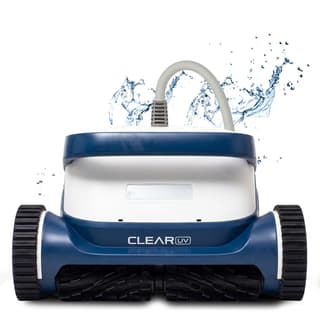
Clear UV
$1999.00 $2999.00 Save 33%
UV-C sanitation neutralizes algae spores as it cleans, and 1-micron UltraFilter media polishes out the fine particles that feed the next bloom. Our pick for pools with a history of going green.
View Details → Free shipping · 30-day returns
Your next step
The bottom line
Green water has three possible causes and only one of them is algae — the others are metals and pollen, and both are treated completely differently. Confirm which you're dealing with before you buy a single chemical. If it is algae, the recovery is a five-day sequence rather than a product: balance, brush, shock hard, filter around the clock, then remove the dead bloom with fine media.
Clear water is a system, not a one-time rescue. If your pool has gone green more than once, take our 60-second Help Me Choose quiz and we'll match a robot to your pool's size, surface, and debris load — or browse our ranked best robots for algae removal. Everything ships free with 30-day returns and full manufacturer warranties.
