

Pool water testing comes down to five numbers: free chlorine (1–3 ppm), pH (7.2–7.6), total alkalinity (80–120 ppm), calcium hardness (200–400 ppm), and cyanuric acid (30–50 ppm) — plus salt if you run a chlorine generator. Test two to three times a week in season, and always adjust in the right order: alkalinity, then pH, then hardness, then stabilizer, then sanitizer. After helping more than 10,000 pool owners since 2011, we can tell you most "broken pool" problems are really testing problems — here's the whole system, minus the chemistry degree.
Key takeaways
- Five numbers run your pool: chlorine, pH, alkalinity, calcium hardness, and cyanuric acid.
- Chlorine and pH are the daily drivers: everything else moves slowly and needs only weekly attention.
- Pick the right tool: strips for speed, drop kits for precision, smart monitors for catching drift early.
- Order matters: fix alkalinity before pH, and set stabilizer before judging your chlorine.
- Test before you blame equipment: in our experience, water chemistry explains most "my pool robot isn't working" calls.
The pool water testing chart: ideal ranges
Print this, tape it inside the equipment-pad door, and you're ahead of most pool owners:
| Test | Ideal range | Why it matters |
|---|---|---|
| Free chlorine | 1–3 ppm | Kills bacteria and algae — your sanitizer |
| pH | 7.2–7.6 | Controls chlorine strength and swimmer comfort |
| Total alkalinity | 80–120 ppm | Buffers pH against wild swings |
| Calcium hardness | 200–400 ppm | Protects surfaces from etching and scale |
| Cyanuric acid (CYA) | 30–50 ppm | Sunscreen for chlorine — too much smothers it |
| Salt (salt pools) | Per your system | Feeds the chlorine generator |
Saltwater systems typically specify somewhere around 2,700–3,400 ppm, but always follow your chlorinator's manual — and remember a salt pool is still a chlorine pool, so every other range above applies. Our salt water pool maintenance guide covers the extra wrinkles. Two reassurances while we're here: salt readings move slowly, so monthly checks suffice unless you've added water, and every robot we sell — see the saltwater lineup — is fully salt-compatible.
What each number actually controls
Free chlorine is the sanitizer itself — the difference between a pool and a pond. Below 1 ppm, bacteria and algae start winning; that's the road to a green pool, and why pools turn green so fast after a lapse. And that sharp chlorine smell at crowded pools? It's chloramines — used-up chlorine bound to contaminants — a sign the water needs more sanitizer, not less.
pH decides how hard your chlorine works. In the 7.2–7.6 window, most of your chlorine stays in its active killing form; up at 8.0, the majority of it is chemically sidelined. High pH also clouds water and scales surfaces, while low pH corrodes metal and stings eyes.
Total alkalinity is pH's shock absorber. In range, pH drifts slowly and predictably. Too low, and pH bounces around with every rainstorm; too high, and pH creeps stubbornly upward.
Calcium hardness protects your pool shell. Soft water pulls calcium out of plaster and grout; hard water dumps it back as scale and haze.
Cyanuric acid (CYA) shields chlorine from sunlight, which would otherwise destroy it in hours. But CYA accumulates — every stabilized chlorine puck adds more — and past 100 ppm it buffers chlorine so heavily that normal doses stop working well.
Test strips vs. liquid kits vs. smart monitors
There's no single best tool — there's the right tool for each job, and most well-run pools use two of the three.
| Method | Accuracy | Effort | Best for |
|---|---|---|---|
| Test strips | Coarse | Seconds | Quick midweek trend checks |
| Liquid drop kit | High | 10–15 minutes | Precise readings before dosing |
| Smart monitor | Continuous | None after setup | Catching drift the day it starts |
Strips are fast and cheap, but they read in color blocks — fine for "chlorine looks low," useless for "exactly how much acid do I add." Liquid drop kits are the accuracy standard; the tradeoff is a genuine 10–15 minutes of counting drops, which is why so many kits gather dust by August. Whichever you choose, store it indoors — reagents and strips both drift when they bake in a hot equipment shed. Digital and continuous monitors trade some lab precision for something more valuable in practice: they never forget to test, and their apps graph trends so you see chlorine sliding three days before it becomes a problem.
Our take on the ICO smart water monitor
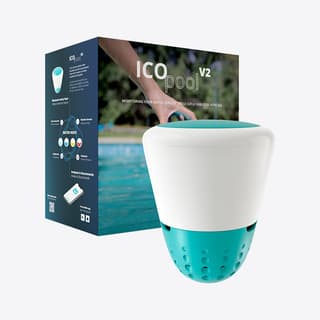
We sell exactly one water-testing device, and we picked it deliberately. The ICO is a floating smart monitor that samples your water continuously and pushes readings, trends, and plain-English dosing guidance to your phone. In our experience, the killer feature isn't precision — it's timing. Almost every green pool starts as three quiet days of falling chlorine that nobody tested; a monitor turns that silent slide into a Tuesday-afternoon notification, and the fix into a two-minute chore. It also ends the second-guessing after events — storms, parties, top-offs — because you watch the numbers move in the app instead of wondering whether to drag out the kit.
Two honest caveats. The ICO measures and advises, but it doesn't dose — you still add the chemicals. And like any sensor, it deserves a drop-kit cross-check every few weeks. At under $500 it's not an impulse buy, but against the cost of even one swamp recovery, the math is friendly. See full specs on the ICO product page.
ICO Smart Water Monitor
$499.00 $699.00 Save 29%
Floats in the pool and tracks your chemistry around the clock, with app trends and dosing guidance — so drift gets caught on day one instead of the weekend the water turns.
View Details → Free shipping · 30-day returns
How often should you test pool water?
Cadence beats precision. A rough strip reading every three days protects your pool better than a laboratory-grade test once a month.
- In season: 2–3 times per week for chlorine and pH; alkalinity weekly; calcium hardness and CYA monthly.
- After events: always retest after storms, parties, heavy swim days, and fresh-water top-offs — each one moves your chemistry.
- During a problem: daily testing while you're fighting algae or cloudy water.
- Off-season: every week or two under a cover.
If you're new to all of this, our pool maintenance for beginners guide folds testing into a simple weekly routine. Cadence should flex with the calendar, too — test more in the hottest weeks, when heat burns chlorine faster and algae grows quickest, and heavily at opening and closing, when the water is changing fastest.
Adjust chemicals in this order
Chemicals interact, and dosing out of order means chasing your own tail. The sequence that works:
- Total alkalinity first. It's the foundation — fixing it will drag pH around, so settle it before touching anything else.
- pH second. With alkalinity stable, pH adjustments actually hold.
- Calcium hardness third. Slow-moving; raise with calcium chloride, lower only by dilution.
- Cyanuric acid fourth. Set stabilizer to 30–50 ppm so your chlorine target means something.
- Sanitizer last. Chlorine's effectiveness depends on the pH and CYA you just set — dose it last and it goes further.
Give the pump a few hours to circulate between adjustments, and retest before the next one. Big corrections are better made in two rounds than one heroic dose. A concrete example of why sequence matters: muriatic acid lowers both pH and alkalinity, so if you set pH first and alkalinity second, the second dose shoves pH right back out of range — and you end up dosing in circles.
How to take a sample that tells the truth
A test is only as good as the water you hand it, and most bad readings are sampling errors rather than kit failures.
Sample elbow-deep, away from returns and skimmers. Surface water is chemically unrepresentative — it's warmer, more sun-exposed, and carries the oils and debris film. Water beside a return jet is whatever you last added, not what the pool actually holds.
Sample with the pump running, after a good turnover. Testing a pool that has been still for hours measures a layer, not a body of water. Give the pump a couple of hours first.
Never test right after adding chemicals. Give it at least one full turnover — usually six to eight hours — before you believe any reading. Testing an hour after dosing is how people end up chasing their own additions all weekend.
Rinse the sample container with pool water first. Detergent residue in a cup from the kitchen will skew results, sometimes dramatically.
Keep reagents fresh and shaded. Test reagents expire, and heat kills them faster than time does. A kit that lived in a hot pool shed all summer is a kit that quietly started lying to you.
Common pool water testing mistakes
Fifteen summers of service calls, one list:
- Sampling at the surface or near a return jet. Dip elbow-deep, away from jets, for water that represents the pool.
- Testing with expired reagents or stale strips. Both degrade — replace them each season and keep lids tight.
- Wet fingers in the strip bottle. One splash of moisture can ruin the rest of the bottle.
- Testing right after adding chemicals. Wait several hours of circulation or you're reading the dose, not the pool.
- Ignoring CYA all season. Stabilizer creeps up silently until chlorine stops working; check it monthly.
- Reading strips on their own schedule. Color windows are timed — a strip read late lies.
- Only testing when the water looks bad. By the time it looks bad, you've lost days.
- Never testing the fill water. Your hose or well water has its own chemistry — hardness, metals, pH — and every top-off nudges the pool toward it.
Put your pool on autopilot
Testing tells you what the water needs; the other half of a clear pool is removing debris before it consumes your sanitizer. That's the pairing we recommend to almost everyone: a monitor watching chemistry, a robot handling the physical cleaning on a schedule, and our maintenance guide tying the weekly routine together. If you want both halves smart, the app-controlled Clear S schedules its own cleaning cycles the same way the ICO watches your water. Robots with Wi-Fi scheduling close the loop nicely — when the monitor flags a dusty, high-demand week, bumping up the cleaning schedule is a tap, not a chore.
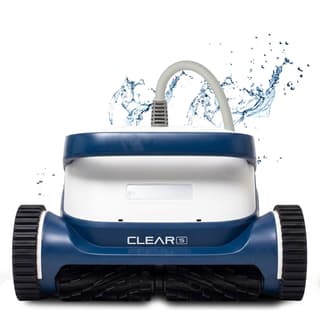
Clear S
$1749.00 $2749.00 Save 36%
App-scheduled cleaning with ultra-fine filtration — the mechanical half of a self-running pool, alongside a smart monitor watching your chemistry.
View Details → Free shipping · 30-day returns
The bottom line
Test twice a week in season, sample elbow-deep with the pump running, and adjust in order — alkalinity, then pH, then sanitizer, then stabilizer. Strips are fine for a quick chlorine and pH check; keep a drop kit for the numbers that matter when something's wrong. Almost every expensive pool problem starts as a reading somebody didn't take.
Not sure which robot fits your pool? Take our 60-second Help Me Choose quiz and we'll narrow it to the single best match — free shipping, 30-day returns, and full manufacturer warranties on everything.
