

Let's clear this up first: a salt water pool is not maintenance-free — it's lower-maintenance. The salt cell generates chlorine automatically, which eliminates weekly jug-hauling and smooths out sanitizer swings, but salt water pool maintenance still means testing weekly, managing pH, cleaning the pool, and caring for the cell itself. We've hand-tested 70+ robotic cleaners since 2011 and helped more than 10,000 pool owners — a large share of them on salt systems — so here's the honest breakdown: what changes with salt, what doesn't, and where the real time savings actually are.

Key takeaways
- A salt pool IS a chlorine pool: the cell makes chlorine from dissolved salt — the sanitizing chemistry is identical.
- Still test weekly: pH drifts upward in salt pools, so free chlorine and pH stay on the weekly list.
- The new tasks: monthly salinity checks and a cell inspection every 2–3 months. Cells last roughly 3–7 years.
- Cleaning is unchanged: skimming, brushing, vacuuming — and every robot we sell is saltwater-compatible.
- Fresh-water rinse: hosing off the robot and gear after use is the cheapest corrosion insurance there is.
The maintenance-free myth, busted
Salt systems get sold as set-and-forget. What they actually automate is one job — chlorine production — and they do it brilliantly: steady, low-level chlorination without buying, storing, or hand-dosing chlorine, and without the sharp sanitizer spikes and dips that make traditional pools swing between harsh and under-protected.
Everything else is still yours: testing, balancing, skimming, vacuuming, filter care, and a new line item — the cell itself. The owners who believe the myth typically enjoy one effortless season, quietly stop testing, and then meet a scale-choked cell and a pH of 8.2 in year two. Skip that surprise: the real routine works out to about twenty minutes a week, and we'll lay out every piece of it below.
What a salt system actually does
Your salt-chlorine generator pushes pool water across charged plates inside the cell, converting dissolved salt into chlorine through electrolysis. That chlorine sanitizes exactly like packaged chlorine — then reverts back to salt and gets reused, which is why salinity stays fairly stable and you only top up salt after heavy rain, splash-out, or a partial refill.
Typical target salinity is around 2,700–3,400 ppm depending on your system — roughly a tenth as salty as the ocean, which is why the water feels soft and pleasant rather than briny. The right mental model: you didn't remove chlorine from your pool. You brought the chlorine factory in-house, and like any equipment, it needs occasional attention.
What's different about salt water pool maintenance
Four genuinely new or changed jobs:
- Salinity testing — monthly. Check with test strips, a digital tester, or your control panel's readout, and confirm after big rain or refills. Top up with pool salt per your system's chart when it runs low; resist the urge to overshoot, because high salinity strains the cell and can trigger shutdowns.
- Cell inspection — every 2–3 months. Pull the cell and look at the plates. White, crusty calcium scale reduces chlorine output and shortens cell life. If you see buildup, clean it per the manufacturer's directions — usually a hose-off or a diluted acid soak. Never scrape the plates with metal tools.
- pH management — weekly, and it matters more. Electrolysis naturally pushes pH upward, so salt pools drift alkaline week after week. Left alone, high pH makes your chlorine less effective and accelerates scale on the cell — the two most common salt-pool complaints share that single root cause. Test weekly and keep pH at 7.4–7.6; our water testing guide covers the how.
- Cell lifespan planning. Cells are consumables. Most last about 3–7 years depending on runtime, water balance, and cleaning habits, so fold an eventual replacement into your long-term budget.
One more quirk worth knowing: most cells stop producing chlorine when water temperature falls below roughly 60°F. That's a protective feature, not a malfunction — in cool months, follow your panel's guidance and test a little more often.
What stays exactly the same
Everything mechanical, for a start: skim the surface, empty the skimmer and pump baskets, brush the walls, vacuum the floor, and keep the filter clean. Alkalinity, calcium hardness, and stabilizer still need monthly checks, exactly as in a traditional pool. Shock still has a place, too — most systems include a boost mode for routine spikes, but after a storm, a crowded weekend, or an algae scare, manual shock clears contamination faster than the cell can generate.
Fine filtration matters just as much, too. Salt water doesn't repel dust, pollen, or silt — a salt pool collects the same fine debris as any other, and it shows in soft, sun-heated water just as quickly. Whatever cleans your pool needs filter media fine enough to catch the small stuff, not just leaves.
And the biggest workload in any pool — getting debris off the floor and walls before it stains or feeds algae — is still a robot's job. The full season-by-season rhythm lives in our maintenance hub, and the beginner fundamentals apply to salt pools verbatim.
Your salt water pool maintenance schedule
| Frequency | Tasks |
|---|---|
| Weekly | Test free chlorine and pH; skim; empty skimmer and pump baskets; run the robot 2–3 cycles; quick waterline brush |
| Monthly | Test salinity, alkalinity, calcium hardness, and stabilizer; wipe any forming scale line; check cell output on the panel |
| Every 2–3 months | Pull and inspect the salt cell; clean only if scale is visible |
| Seasonally | Deep-clean the filter; re-check salinity after heavy rain; follow cold-water guidance once temps drop below 60°F |
Total hands-on time in a normal week: about twenty minutes, because the robot's cycles run unattended while the cell quietly handles sanitizer production.
One scheduling habit ties it together: put the robot on a recurring schedule — every model with a weekly timer or app scheduling can do this — and let the cleaning happen on autopilot the same way the chlorination does. When both halves of the routine run themselves, your twenty minutes is mostly reading test results and emptying baskets, which is about as close to a self-maintaining pool as physics allows.
Do robotic pool cleaners work in saltwater?
Yes — completely. Every robot we sell is saltwater-compatible. Robotic cleaners run sealed, low-voltage motors and drivetrains engineered for salt pools, and at roughly 3,000 ppm your water is far gentler than the word "salt" suggests — a tenth of seawater. Salt pools are heavily represented among the owners we've helped since 2011, and salt-related robot failures simply aren't a thing we see come through service.
Two habits keep it that way. First, rinse the robot, cable, and filters with fresh water after cycles so residue never dries inside it. Second, don't store the robot in the pool — pull it out when the cycle ends, which we recommend for every pool type anyway. A robot actually helps with salt-specific upkeep, too: models that scrub the waterline knock down the scale line where evaporation concentrates minerals. Browse every model in our saltwater collection, or start with the two we recommend most for salt pools:
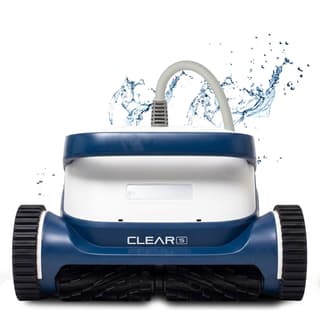
Clear S
$1749.00 $2749.00 Save 36%
Fully sealed for salt pools, with ultra-fine filtration that grabs the fine scale dust salt cells can shed, app scheduling, and floor-to-waterline coverage — backed by a 3-year warranty.
View Details → Free shipping · 30-day returns
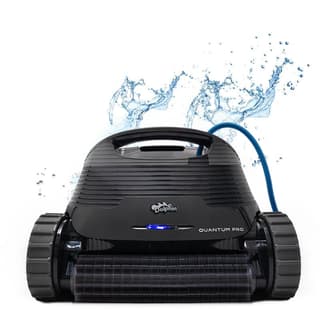
Dolphin Quantum
$1649.00
Flagship-grade cleaning that's fully saltwater-safe for hundreds less — XXL fine filter basket, wall and waterline scrubbing, and a weekly timer so the pool cleans itself on schedule.
View Details → Free shipping · 30-day returns
The salt cell: the part that decides your costs
Everything expensive about a salt pool runs through one component, and most owners don't think about it until it fails.
It has a finite life. Salt cells are consumables with a service life measured in years of operation, and replacing one is the single largest recurring cost of salt water pool maintenance. Anything that shortens that life is expensive; anything that extends it pays for itself.
High pH is what kills them. Chlorine generation naturally drives pH upward, and scale forms on the cell plates when pH runs high. Scaled plates generate less chlorine, which tempts owners to run the cell harder, which wears it faster. Keeping pH at the low end of range is the highest-value habit in salt pool ownership.
Inspect it, don't just trust it. Pull and look at the cell a couple of times a season. White crusty deposits mean it's time for an acid rinse per the manufacturer's instructions — and if you're doing that constantly, your pH is the real problem.
Cold water stops production. Most cells stop generating below roughly 60°F, which catches people out in shoulder season. That's when you supplement with liquid chlorine rather than assuming the system has it covered.
Keeping corrosion in check
Salt gets blamed for more corrosion than it causes. At proper salinity, balanced salt water is gentle — the real corroder is unbalanced water, in any pool. A few practical habits cover you:
- Keep salinity in range. More salt is not better; it just works the cell and the metal harder.
- Don't let pH camp high. Sustained high pH scales the cell and waterline; sustained low pH etches metal and surfaces. Weekly testing is the whole defense.
- Rinse the splash zone. An occasional fresh-water rinse of handrails, ladders, and nearby stonework clears salt residue before it dries and concentrates.
- Rinse your gear. The robot, its cable, and anything else that lives in the water gets the same quick hose-off.
- Check the anode if you have one. Many salt-pool equipment pads include a sacrificial zinc anode — glance at it yearly and replace it when it's mostly consumed.
Your next step
The bottom line
A salt pool is a chlorine pool that makes its own chlorine — same targets, same testing, same cleaning. What changes is where your attention goes: watch pH, which climbs constantly, and look after the salt cell, which is the one part whose life you directly control. Robots are entirely at home in salt water; just rinse yours with fresh water after each cycle and it'll never know the difference.
If you're setting up your salt pool's cleaning crew, start with the saltwater collection or take the 60-second Help Me Choose quiz — tell it your pool's size, surface, and debris, and we'll match the robot. Our full rankings live in the best robotic pool cleaners guide, and our team is happy to talk salt specifics before you buy. Free shipping, 30-day returns, full manufacturer warranties — and saltwater-safe, every single one.
