

Sand in your pool comes from one of three places: a broken lateral or standpipe inside your sand filter (the most likely culprit if sand collects near the return jets, especially after backwashing), wind and foot traffic carrying it in from outside, or — the twist that fools everyone — it's not sand at all, but mustard algae doing an impression. We've diagnosed this hundreds of times since 2011, and a two-minute inspection tells you which problem you have. Here's how to identify the source, get every grain out, and keep it from coming back.
Key takeaways
- Location is the clue: sand piling up under return jets after a backwash points straight at a broken filter lateral.
- Do the brush test: mustard algae billows into a yellow cloud when brushed; real sand stays gritty and put.
- Two removal paths: manual vacuum to waste (fast but throws away water) or a robot with fine filtration (slower, wastes nothing).
- Fix the source first: vacuuming is pointless while a cracked lateral keeps feeding sand back in.
- Lateral replacement is a pro job: it means emptying hundreds of pounds of media without snapping brittle parts.
Where is the sand in your pool coming from?
Before you vacuum anything, spend two minutes on diagnosis — because if the source is your filter, the sand will be back tomorrow.
| Where it shows up | Likely source | The fix |
|---|---|---|
| Piles under return jets, worse after backwash | Broken lateral or standpipe | Repair filter internals |
| Shallow end, steps, near ladders | Wind, storms, swimmers' feet | Remove it, block the path |
| Shaded walls and floor, yellow-brown tint | Mustard algae, not sand | Treat as algae |
Source 1: A broken lateral or standpipe in your sand filter
Inside a sand filter, water is pushed down through the sand bed and collected at the bottom by laterals — slotted plastic fingers that let clean water through while holding the sand back. A central standpipe carries that water up and out to your returns. Crack any of it, and the filter starts quietly shipping its own sand into your pool.
The signature is unmistakable: fresh sand sprayed beneath the return jets, reappearing no matter how often you vacuum, and noticeably worse right after backwashing (which stirs the bed and pushes grains through the crack). Confirm it with a simple cycle — vacuum the pool completely, backwash, then check the returns the next day. New sand means something inside the tank is broken, and the repair section below is your real fix. Persistent cloudiness alongside the sand is another tell, since a filter with cracked internals also stops polishing the water the way it should.
One benign exception before you condemn the tank: right after a fresh sand change, a little fine dust in the pool is normal — new media sheds its smallest particles until the bed settles, and a proper rinse cycle before the first filtering run clears most of it. Sand that's still arriving weeks later is not that. And one useful distinction: if the material is gray-white powder rather than tan grit, that's DE media escaping through a torn grid in a DE filter — same principle, different internals.
Source 2: Wind, storms, and swimmers' feet
If sand shows up in the shallow end, on steps, or near ladders — and your returns are clean — it's coming from outside. Sandboxes, beach toys, a sandy yard, nearby construction, or a good windstorm will all seed a pool, and every swimmer's feet carry a little in. This version is the easy one: no equipment is broken. Remove it with the methods below, then cut the supply line — hose off the deck instead of sweeping toward the water, rinse feet before swimming, and keep the cover on during storms and windy stretches. After a big blow, give it a day before the final pass — wind-blown grit keeps settling out of the water for hours, so a single same-afternoon cleanup always misses some.
Is it actually sand? The mustard algae brush test
Every season, pool owners spend weeks vacuuming "sand" that keeps returning to the same shaded spots. Here's the thirty-second test: push a pool brush through one of the patches. Real sand stays gritty — it shifts and scatters along the floor but remains clearly granular. Mustard algae erupts into a yellowish cloud the moment the brush touches it, then resettles nearby within hours.
Two more tells: mustard algae favors shaded walls and floors and will cling to vertical surfaces, which sand cannot do. The vacuum behaves differently too: real sand is heavy and stays collected once captured, while mustard algae is fine enough to slip through coarse mesh and drift back — which is why "sand" that survives vacuuming after vacuuming is usually alive. If your brush test says algae, stop vacuuming and switch playbooks — it needs a triple-strength shock treatment, which we cover step by step in our guide to getting rid of pool algae. And if you're wondering whether your cleaner helps with either material, here's the honest rundown on whether robots pick up algae.
How to get sand out of your pool
Sand is heavy, so it settles fast and stays put — which makes removal straightforward once the source is handled. Start with two minutes of prep either way: brush sand off steps, benches, and ledges down to the main floor, then let the water sit still for twenty minutes so you're collecting a settled drift instead of chasing a cloud. Then pick your path:
- Manual vacuum to waste. With a multiport valve set to "waste," everything you vacuum leaves the pool instantly without touching the filter. It's the fastest bulk-removal method, but it drains real water (top off first), demands slow, careful passes so you don't cloud the sand up, and isn't an option on most cartridge systems. Full technique in our how to vacuum a pool walkthrough.
- A robotic cleaner with fine filtration. Sand grains slip through coarse leaf baskets, so the robot needs fine cartridges or ultra-fine media. Run a full-floor cycle, empty the filter, repeat — no water lost, no hoses, no multiport required. The models we rank for sand pickup and fine dirt all trap grit down to fine-silt sizes.
If your grit skews powdery — fine enough to leave ghost trails behind the robot — step up to ultra-fine filter media, which holds silt down to the micron range. For a one-time windstorm dump, either path works. For ongoing grit — a sandy yard, kids, a beach nearby — the robot wins on pure practicality, because it repeats the job on a schedule without you.
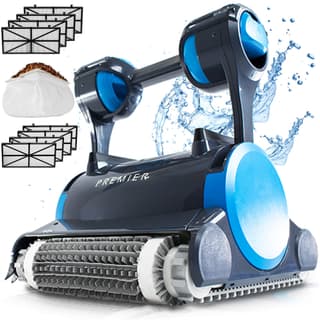
Dolphin Premier
$1999.00 $2499.00 Save 20%
Swap in the fine cartridges or optional NanoFilters for sand and silt, then back to the oversized leaf bag in fall. The most adaptable debris-handling system we've tested.
View Details → Free shipping · 30-day returns
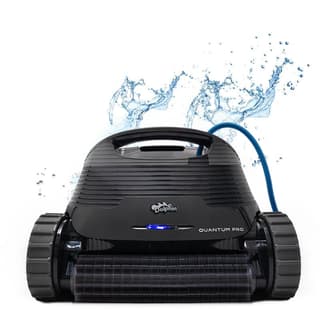
Dolphin Quantum
$1649.00
The XXL top-load basket's fine mesh holds sand and silt that coarse baskets let sail through — and it rinses clean in seconds at the hose.
View Details → Free shipping · 30-day returns
Fixing the filter: when to open the tank
If diagnosis points inside your sand filter, the pool-side cleanup can wait — repair comes first. Opening the tank means removing the multiport valve or dome, scooping out all the media, and inspecting the standpipe and each lateral for cracks. Plan for what you'll find: laterals grow brittle with age, and it's common to crack two more while extracting the broken one. Your pressure gauge offers a preview, too — a cracked lateral often shows lower-than-normal filter pressure, because water is short-cutting through the break instead of pushing through the full sand bed.
We'll be straight with you: this is a job we recommend handing to a professional. The media weighs hundreds of pounds wet, the internals are fragile, and reassembly has to be exactly right or you'll re-seed the pool the day you restart the pump. While the tank is open, it's also the natural moment to replace media that's five or more seasons old, since worn, channeled sand filters poorly anyway. If you're troubleshooting other equipment symptoms alongside the sand — pressure swings, weak returns — our troubleshooting guide helps you narrow things down before you call anyone.

How to keep sand out of your pool
- After every backwash, run the rinse cycle for 20–30 seconds before returning to filter mode — it resettles the sand bed and flushes loose fines to waste instead of into your pool.
- Glance at the return jets weekly. A teaspoon of sand under a return is an early warning that beats discovering a beach next month.
- Cut the outdoor supply: hose the deck away from the water, rinse sandy feet, cover the pool in windstorms.
- Run scheduled robot cycles so incidental grit is removed while it's still a dusting, not a drift — two or three cycles a week keeps floors genuinely bare.
- Mind your water balance. Aggressive, low-pH water is harder on every plastic and rubber part in the circulation system — filter internals included.
Your next step
The bottom line
Diagnose before you clean. Sand that reappears within days of every vacuum is almost always coming through your own filter — a cracked lateral or standpipe — and no amount of cleaning fixes a source you haven't found. Sand that arrives with wind, storms, and feet is a filtration problem instead, and fine media on a robot handles it. The brush test tells you within seconds whether you're even looking at sand or at mustard algae.
Once the source is fixed, the right robot makes sand a non-event. Take our 60-second Help Me Choose quiz and we'll match a fine-filtration model to your pool's size and surface — or browse every robot we rate for sandy pools. Free shipping, 30-day returns, and full manufacturer warranties, always.
