Why Painted Pools Chalk, and What a Robot Can Do About It
Chalking is the paint itself breaking down at the surface. Sun, sanitizer and water balance all play a part, and every pool paint does it sooner or later. The test is simple: rub a wall underwater with your palm. A white film on your hand means the pool is chalking.
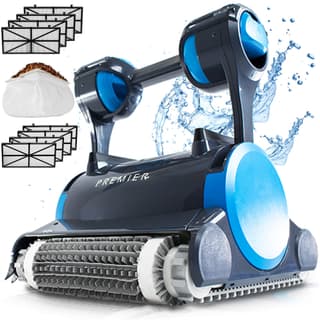
A robot does not stop that process. It removes the powder that has already come loose, from the floor where it settles and from the walls where brushes lift it, provided the filter is fine enough to hold it. Run with standard panels and the robot becomes a stirrer: the chalk goes in, comes out and hangs in the water. Run with ultra-fine media and each cycle takes some out of the pool for good.
Running Fine Filters Without Choking the Robot
Ultra-fine filters have very small openings, so they fill quickly. A robot with a blinded filter moves less water, cleans less and may stop climbing walls. On a chalking pool the routine matters as much as the robot.
- Clear leaves and flakes first with standard filters or a leaf bag, then switch to ultra-fine media for the chalk.
- Rinse fine filters after every cycle, from the clean side out, until the water runs clear.
- If the pool is very cloudy, expect to stop and rinse partway through the first few cycles.
- Keep the pool's own pump and filter running as normal. A robot adds to them and does not replace them.
Blisters, Flakes and Repainting
Chalk is normal aging. Blisters and flakes are not. They mean the coating has lost its bond, usually from moisture behind the paint, poor preparation or simple age. A robot will collect the flakes, and a leaf bag or coarse panel is the right media for them, but it cannot fix the cause and will keep finding new ones until the pool is repainted.
After a repaint, wait for the full cure time the paint maker specifies before filling the pool or putting any cleaner in the water. Then start with standard filters, and go back to ultra-fine media when the new coat eventually begins to chalk.
A Chalk-Control Routine
- Do the palm test on a wall each spring so you know whether the paint has started to chalk.
- Once it has, fit NanoFilters or 1-micron panels as your default and keep the standard set for leaf days.
- Run the robot the morning after heavy use, when stirred-up powder has settled back onto the floor.
- Lift the robot out before shocking, and look over the brushes for paint flakes when you rinse the filter.