Where the Robot and Power Supply Live Indoors
A pool room is wet floor, condensation and splash. The power supply has to stay dry and sit back from the water's edge by the distance your manual gives, on a shelf or stand, not on a deck that gets hosed down. Check the manual before using any extension cord.
Between cycles, a caddy is the tidy answer. None of these robots includes one, so consider adding a caddy to the order. On a timer or app schedule, the robot can stay in the water between scheduled cycles; lift it out at least weekly to rinse the filter, and always before shocking or adding chemicals. If you start it by hand a couple of times a week, park it on the caddy in between.
Fine Filters Clog Sooner Than You Expect
Ultra-fine media traps particles a standard filter lets through, and indoors that is nearly everything the robot picks up. Lint and hair mat across the surface, and body oil makes the layer sticky. A filter that looks lightly soiled can already be restricting flow, which shows up as weaker wall climbing.
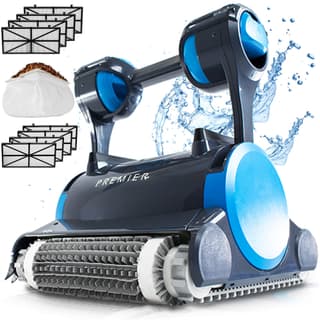
Rinse after every cycle or two instead of waiting for an alert. Keep the standard filters or coarse panels on hand too: after a party or building work, run one pass on the coarser media, then go back to the fine set.
Limits Worth Knowing Before You Buy
A robot cleans surfaces; it does not treat water. Sanitizer, the main filter and the room's air handling stay your job. Waterline brushing slows a fresh film, but a line that has hardened into scale needs a tile cleaner and elbow grease.
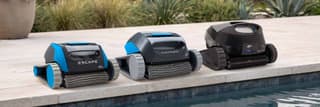
Two robots we sell are missing from this list. The Cayman suits a small indoor pool on a budget, but it does not scrub the waterline and its NanoFilter panels are an add-on, the two things this page is about. The Escape is built around above-ground pools.
Indoor Setup Tips
- Schedule cycles for closed hours so the robot and its floating cable are never in the water with swimmers.
- Open any automatic or floating cover fully before a cycle starts; a robot cannot work under one.
- Stand the power supply on a raised, dry surface away from splash, at the setback your manual specifies.
- If the pool is kept warm, compare your usual water temperature with the operating range in the manual before the first run.