Why Robots Get Stuck, Most Likely Cause First
Before you spend anything, work out which of these you actually have.
- Twisted cable. The robot is pulled sideways, circles one area or stops short of the far end. Coils floating on the surface are the giveaway.
- Full filter. Less flow means less grip. The robot slides off walls, stalls on slopes or seems to float.
- An obstacle. Drain domes, ladder legs, step corners and handrail anchors. The stall happens in the same place every time.
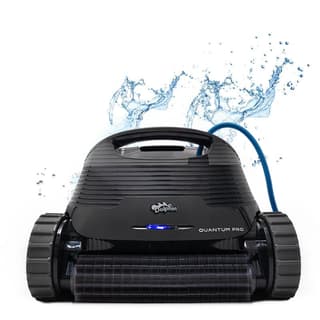
- Shallow water. On top steps and ledges a robot can draw air and stop. Of the picks here, the Quantum alone lists stairs, sun shelves and Baja ledges in its coverage.
- Air in the body. A robot dropped in quickly can hold a bubble and float or tip. Lower it in and let the air escape first.
What No Robot Avoids
We would rather say this before you buy than after: no robot never gets stuck. A pool toy on the floor, a loose drain cover, a liner wrinkle, a filter that filled in the first twenty minutes of a leaf storm: any of these will stop the best machine on this page. Better robots change how often it happens and how easily they recover.
If your robot stalls daily, do not shop yet. Run the checklist for a week. You will usually find one cause, most often the cable, and the fix costs nothing. If the stalls continue on a straight cable and a clean filter, tell us about the pool and we will help you work out whether a different robot would behave differently.
The Five-Minute Stuck-Robot Checklist
- Unplug the cable from the power supply, lay it out straight on the deck and work out every twist.
- Open the robot, empty and rinse the filter, and check the intake for a wedged twig or acorn.
- Note where it stopped. The same spot twice means an obstacle: tighten a loose drain cover, lift out a removable ladder, clear toys from the floor.
- Check the water level. If it has dropped, steps and ledges may now be too shallow for the robot to stay submerged.
- Sink the robot slowly, rocking it until the bubbles stop, then start the cycle and watch the first ten minutes.