Above-Ground Rounds and Ovals: What to Expect
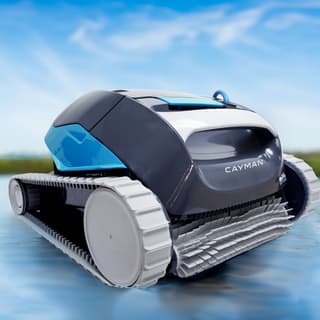
The four in-ground picks above are not rated for above-ground pools, so for a round or oval above-ground pool the choice is the Cayman or the Dolphin Escape. The Escape is outside this page's ranking but well suited: it lists round pools among its published shapes and is the lowest-priced Dolphin discussed here. It is rated for pools up to 33 ft. Its 40 ft cable is the practical limit, so on rounds larger than about 24 ft, measure the cable run from where the power supply will sit before choosing it. When that run is long, the Cayman and its 50 ft cable are the safer choice.
On any flexible wall, expect a clean floor and a clean wall base. Climbing higher depends on wall firmness, and neither robot scrubs the top band, so a quick wipe there stays on your list.
Why Curves Twist Cables, and the Fix
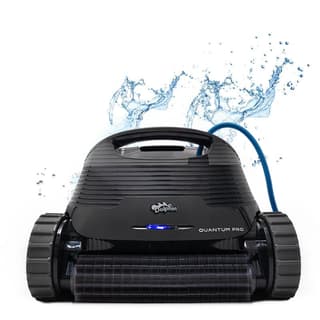
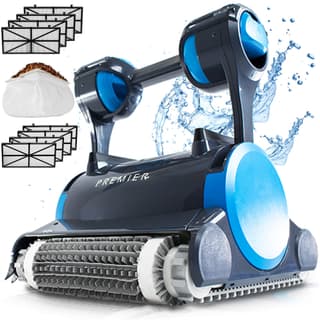
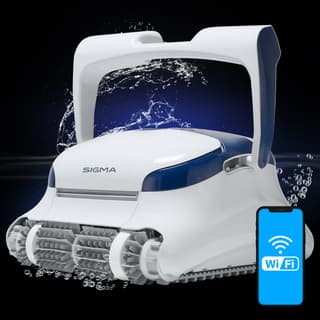
In a rectangular pool a robot turns left about as often as right, and the twists tend to cancel. Along a curved wall it keeps correcting in one direction, and in a round pool it may circle the same way for most of a cycle. The twist builds until the cable forms coils, and coils shorten the cable and pull the robot off its line. A swivel, as fitted to the Sigma, Premier and Quantum, releases the twist as it forms. On a cable without one, the fix is a habit:
- Before each run, lay the cable out straight with no loops.
- Feed in just the cable the pool needs and leave the rest on the deck.
- Every few cycles, unplug the cable from the power supply and run it through your hands from the robot outward, letting the free end spin.
Setup Tips for Curved Pools
- Place the power supply near the middle of the pool's long axis so the cable reaches every lobe without being pulled tight.
- On an above-ground pool, smooth the liner and check the cove before the first run; a robot follows an even cove far better than a lumpy one.
- If the robot keeps sliding off the same stretch of curved wall, clean the filter first, since lost flow means lost grip.