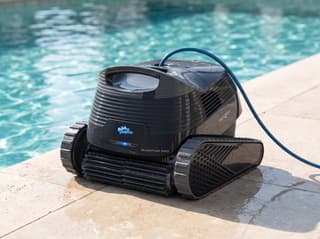

What Actually Clears Mustard Algae
The treatment is chemistry plus elbow grease. Brush every surface, including the spots a robot never touches: behind the ladder, around the light, the top step. Shock the pool, hold the chlorine up for as long as the product label or your pool professional directs, and consider an algaecide labeled for mustard algae. Clean or backwash the pool filter afterward.
A robot does none of that. It takes over the daily wall scrubbing once the water is back in its normal range and collects the fine dead algae that settles.
Wash the Robot, or It Re-Seeds the Pool
This is the step most guides leave out. Mustard algae survives on equipment: brushes, poles, toys, swimsuits and the robot that has been driving through it. Put an unwashed robot back into freshly treated water and you may be returning the algae with it.
While the pool is being treated, wash the robot thoroughly: filters or basket panels, brushes, tracks and body, following the cleaning directions in your manual, then rinse well. Do not leave it sitting in shock-level chlorine to do the job for you. Take it out before you shock, and check the manual for when it can go back in.
Where the Robot Fits in the Treatment
A workable order of operations, to adapt to your product labels:
- Before treatment: run one cycle to clear leaves and loose dirt, then lift the robot out.
- Treatment: brush by hand, shock, and hold chlorine as directed. The robot stays on the deck and gets washed.
- Recovery: when the water is back in its normal range, return the robot with its finest filters and run it daily. Rinse the filters after every cycle.
- Afterward: keep a frequent schedule through the warm months and keep brushing the shaded spots the robot cannot reach.
Practical Tips During an Outbreak
- Hand-brush first on treatment day; a robot does not reach behind ladders, around light fixtures or onto the top step.
- For the first week back, check the filter after every cycle; dead algae is fine enough to load NanoFilters in a single run.
- Note where the yellow dust first reappears; a patch that returns in one spot often marks poor circulation, so aim a return jet toward it.