Active vs Passive: What the Brush Is Doing
Picture a paint roller pushed along a wall. It turns exactly as fast as it travels, so every point on it touches the wall once and lifts away. That is a passive brush. It knocks off loose dirt but rides over anything with a grip.
Now picture the same roller spinning faster than you push it. The surface is rubbed, not just touched. That is the principle of an active brush, and it is why a stated speed, such as the HyperBrush's twice-standard figure, tells you more than the word active on its own. The brush only loosens. Flow and the filter still have to carry the result away.
Where Brush Speed Pays, and Where It Does Not
Pay for brush speed where film holds on, and save the money where it does not.
- Algae film. The first faint haze on a wall is the kind of film a fast brush is built to lift, provided the sanitizer is doing its part.
- Pebble and textured plaster. Rough finishes hold dirt in their low spots. Faster brushing works into texture that a rolling brush skims over.
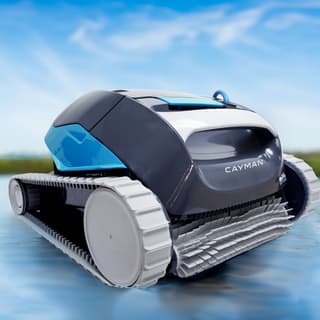
- The waterline. Oils and sunscreen collect where water meets tile. Only robots that climb that high can scrub it, which rules out the Cayman and the Escape for this job.
- Smooth vinyl and fiberglass. These release film easily. A single HyperBrush, as on the Cayman or the lower-priced Escape, is normally all they need.
What Brush Speed Cannot Do
Speed changes how hard a brush works, not where it goes. Top steps, tight inside corners and the wall behind a ladder are missed by fast brushes and slow ones alike, and the Cayman stops below the waterline by design. Keep a hand brush for those places.
Speed does not replace chemistry either. A brush, however fast, removes what is sitting on the surface. It does not stop algae growing, dissolve scale or lift a stain that is in the finish. If the walls feel slick again a day after a cycle, look at sanitizer and water balance before you look at a faster robot.
Using an Active-Brush Robot Well
- Run the robot on a regular rhythm, not just when the pool looks dirty. Film is easiest to remove before you can see it.
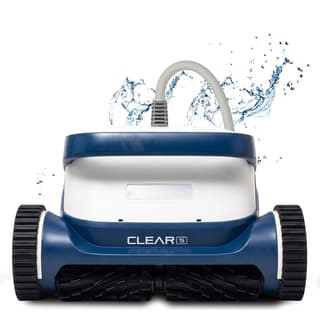
- On the Clear S, use Waterline only after a heavy swim day, when sunscreen and oils have loaded the tile line.
- Rinse the brushes with fresh water when you rinse the filter, then let the robot dry in the shade.
- Look the brush over a few times each season. A worn or torn HyperBrush still spins at full speed and scrubs far less, and it can be replaced.