

Every pool fights the same sequence: debris lands on the surface, floats for a few hours, then sinks, decays, and feeds algae. A pool skimmer exists to win that race — capturing leaves, pollen, and bugs while they're still floating and easy to remove. In this guide we'll break down every type of pool skimmer, from the built-in wall units and their baskets and socks to manual nets and the newer solar-powered robotic skimmers, and show you how the pieces fit together. We've been testing pool-cleaning equipment on real pools since 2011, and if that's taught us one thing, it's this: a clean pool starts at the surface.
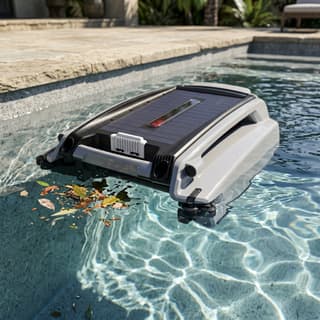
Key takeaways
- Skimmers work the surface: catching debris before it sinks, decays, stains, and feeds algae.
- Four types: built-in wall skimmers, basket and sock upgrades, manual nets, and robotic surface skimmers.
- Robots changed the game: a solar skimmer like the Betta SE Plus patrols the whole surface all day with no cords or charging.
- Skimmers don't clean floors: pair a surface skimmer with a floor-cleaning robot to cover the entire pool.
- Cheap upgrades matter: skimmer socks and regular basket emptying protect your pump and filter.
What does a pool skimmer actually do?
A pool skimmer removes debris while it's still floating — in the first hours after it lands, before it gets waterlogged and sinks. That timing matters more than most owners realize. Floating debris is easy: it sits in one plane, drifts with the current, and lifts out with almost no effort. Sunken debris is a different job entirely. It has to be scrubbed and vacuumed off the floor, and while it waits down there it decays, can stain surfaces, and feeds the algae that turns pools green.
Skimming also protects your equipment. Every leaf a skimmer catches never reaches your pump strainer or filter, which keeps circulation strong — and strong circulation is half of pool care. After fifteen seasons of testing cleaners, our rule is simple: win the surface first and everything below it gets dramatically easier.
The four types of pool skimmers
| Type | How it works | Best for |
|---|---|---|
| Built-in wall skimmer | The pump pulls surface water through a weir door into a basket | Every pool with a pump — the baseline |
| Baskets & skimmer socks | The basket traps debris; a fine-mesh sock upgrades what it catches | Pollen, hair, grass, and fine debris |
| Manual net on a pole | You skim by hand with a flat net or deep leaf rake | Spot cleanups after storms and parties |
| Robotic surface skimmer | A motorized robot patrols the entire surface all day | Hands-off skimming, leafy yards |
One note on manual nets before we go deeper: keep one, even after you automate. A leaf rake on a telescopic pole is still the fastest way to clear a surprise mess before a swim, and nothing else fishes a toy off the bottom.
How built-in wall skimmers work
That rectangular mouth in your pool wall is the front door of your circulation system. The pump draws water through it, and the floating weir door — the flap that swings in the opening — speeds up the surface flow so debris gets pulled in, then swings shut when the pump stops so nothing drifts back out. Everything the skimmer swallows lands in a removable basket you empty by hand.
Two habits keep a wall skimmer working at full strength. First, mind your water level: it should sit roughly one-third to one-half up the skimmer opening. Too high and water slides over the weir without any surface-pulling action; too low and the skimmer can gulp air and starve the pump. Second, add skimmer socks — fine mesh liners that stretch over the basket and catch the hair, pollen, and grass clippings that pass straight through the basket's grid. They cost a few dollars and measurably reduce the load on your filter.
The built-in skimmer's weakness is that it's a fixed suction point. Wind pushes floating debris to whichever corner it favors, and anything that never drifts past the skimmer's mouth just stays on the water. Larger pools compensate with two or three skimmers, but every pool has dead zones — which is exactly the problem the next type solves.
Robotic pool skimmers: surface cleaning on autopilot
A robotic surface skimmer is a small motorized robot that cruises the waterline and open surface, swallowing floating debris into an onboard basket as it goes. Instead of waiting for the wind to deliver leaves to a fixed mouth in the wall, it patrols the entire surface — including the far corners and behind-the-ladder dead zones a wall skimmer never touches.
The best part is the power source: the models we recommend are solar powered. There's no cord to route, no battery-swap routine, and no charging dock to remember — the robot tops itself up in the sun and keeps patrolling through the day. During spring pollen and fall leaf drop you can leave one deployed for days at a time, and it just keeps working while the sun's up. Browse our full pool skimmer collection to see what's available, and if your yard is heavily treed, pair one with a robot built for leaves down below.
Betta SE Plus review: the robotic skimmer we recommend
Betta SE Plus
$389.00 $499.00 Save 22%
Solar-powered, continuously patrolling surface skimming that catches leaves, pollen, and bugs before they can sink — no cords, no charging routine, no daily netting.
View Details → Free shipping · 30-day returns
The Betta SE Plus is the robotic skimmer we recommend first, and the reason is simple: it's the closest thing to hiring someone to stand there with a net all day. Drop it in, and it methodically cruises the surface, herding leaves, pollen, blossoms, and bugs into its catch basket before any of it can sink to the floor. Because it's solar powered, it recharges itself as it works — deploy it Monday and it's still patrolling on Friday.
In our testing on a heavily treed pool, the difference shows up on the pool floor: with the Betta patrolling the surface, dramatically less debris ever makes it down there, which means the floor robot's filter stays cleaner and the water looks better between cleanings. Maintenance is a few seconds — lift it out, empty the basket, rinse, redeploy.
Our verdict
If leaves and surface debris are a daily battle, the Betta SE Plus pays for itself in saved netting time alone. It won't clean your floor and it isn't meant to — but as the surface half of a two-robot team, it's the best solution we've tested.
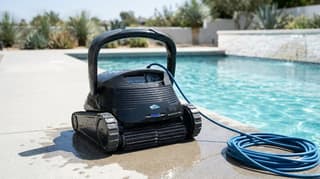
A skimmer handles the surface — pair it with a floor robot
Here's the thing no skimmer of any type can do: touch what has already sunk. Sand, silt, sunken leaves, and the algae film on your floor and walls all live below the surface, and removing them takes brushes and vacuum power. That's a robotic pool cleaner's job. The two machines aren't competitors — they're a team. The skimmer wins the surface so less debris ever sinks; the floor robot scrubs and vacuums everything that does.
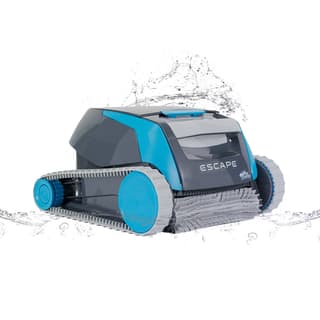
Dolphin Escape
$768.00 $899.00 Save 15%
The floor half of the team for above-ground pools — commercial-grade motor, aggressive HyperBrush scrubbing, and a top-load basket, with no hoses or booster pump needed.
View Details → Free shipping · 30-day returns
For above-ground pools, the Dolphin Escape is our go-to floor partner. For inground pools, you'll want a wall-climbing model from our inground collection — and if your trees are relentless, prioritize a robot with an oversized leaf bag or basket or one of our picks for heavy leaf loads.
Pool skimmer maintenance tips
Whichever skimmers you run, a few minutes of care keeps them at full strength:
- Empty baskets once or twice a week — daily during fall leaf drop and after storms. A packed basket strangles flow and strains the pump.
- Run skimmer socks in the wall skimmer and swap them when they stretch or tear.
- Hold the water level one-third to one-half up the skimmer opening for the strongest surface pull.
- Check the weir door occasionally — it should swing freely. A stuck weir kills skimming action.
- Rinse robotic skimmer baskets with fresh water after each deployment and let them dry in the shade.
- Winterize properly — remove baskets and protect skimmer housings from ice per your region's practice before closing.
Surface care slots into a bigger routine, and our maintenance guide lays out the whole weekly rhythm.
Do you actually need a robotic skimmer?
Not every pool does, and it's an easy purchase to talk yourself into. Three questions settle it.
Does debris float for hours before it sinks? Broad leaves, blossoms, and seed pods float long enough for a skimmer to catch them. Pine needles, acorns, and dirt sink almost immediately — a skimmer will barely see them, and a floor robot is your answer instead.
Does your built-in skimmer keep up? A wall skimmer only pulls surface water toward one or two points, and only while the pump runs. If your surface is clear by mid-morning, you don't need help. If debris sits in the corners the flow never reaches, you do.
Is the surface what actually bothers you? Floating debris is the most visible pool problem and often the least consequential — it's also the one a two-minute pass with a net solves. Be honest about whether you'll enjoy the automation or just resent having bought it.
If you answered yes to the first two, a robotic skimmer earns its place: it runs all day on solar, works whether or not the pump is on, and catches leaves before they sink and start staining. If you answered no, put the money toward better floor filtration instead.
Win the surface, then the whole pool
Start where the debris starts. A well-tended wall skimmer plus a solar robotic skimmer keeps the surface spotless, and a floor-cleaning robot finishes everything below it. Explore our full skimmer lineup, or take the 60-second Help Me Choose quiz and we'll build the right surface-plus-floor combination for your exact pool — we've done it for more than 10,000 pool owners since 2011. Free shipping, 30-day returns, and full manufacturer warranties on everything.
