

The secret to getting leaves out of your pool isn't one heroic cleanup — it's a layered system: catch leaves on the surface before they sink, vacuum the floor with a robot that can actually swallow them, keep your baskets empty so circulation never chokes, and stop a chunk of the leaves from ever reaching the water. We've tested 70+ robotic cleaners since 2011, plenty of them under real October leaf-falls, and this is the routine that ends the nightly skimmer-net workout for good.
Key takeaways
- Layers beat marathons: surface, floor, baskets, and prevention each do a job no single tool can.
- Floating leaves are easy leaves: skim daily — or let a robotic skimmer patrol continuously.
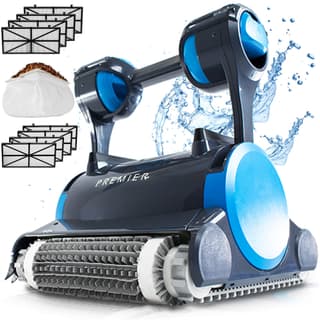
- Leaf bags are the floor answer: oversized-bag robots like the Dolphin Premier inhale whole leaf-falls without clogging.
- Baskets are your circulation: empty the skimmer basket daily at peak drop.
- Leaves feed algae: tannin stains and phosphates make leaf cleanup a water-quality job, not just cosmetics.
How to get leaves out of your pool: think in layers
Every miserable leaf season we hear about follows the same script: the pool owner fights the whole battle with one tool — usually a hand net — and loses ground every windy day. The fix is to work the way leaves actually behave. Leaves float first, sink later, and decompose last, and each stage has a best tool. Skim while they float, robot-vacuum once they sink, keep baskets clear so the pump keeps helping, and trim back the supply at the source. Run all four layers and no single one has to be perfect — which is exactly why the system works.
Layer 1: Catch leaves on the surface before they sink
A floating leaf is a gift. It's visible, it's reachable, and it hasn't started staining anything yet. Two ways to take the gift:
The hand-net technique. Use a flat skimmer net on a telescopic pole and work with the breeze, not against it — start upwind and let the wind herd leaves toward you. Skim the downwind corner where they pile up, and do a quick pass in the evening, since a leaf skimmed today is one you won't vacuum off the floor Thursday.
The continuous option. A robotic surface skimmer patrols all day so the net becomes optional. The solar-powered Betta SE Plus roams the surface collecting leaves, pollen, and bugs before they ever head for the bottom — in leafy yards, it's the single biggest reduction in floor cleanup we see. Browse all pool skimmers, or read our full pool skimmers guide for how surface and floor cleaning divide the work.
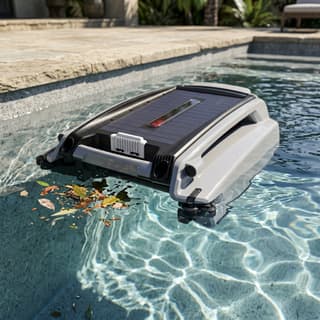
Betta SE Plus
$389.00 $499.00 Save 22%
Solar-powered and relentless — it skims leaves off the surface all day so they never reach your pool floor. The perfect partner for a floor-cleaning robot in a leafy yard.
View Details → Free shipping · 30-day returns
Layer 2: Clear the floor with a leaf-bag robot
Some leaves will always get past you, waterlog, and sink. This is where most robotic cleaners — and every hand vacuum — start to struggle: standard fine-filter baskets are built for dirt and silt, and a heavy leaf load packs them within minutes. The answer is a robot designed to swallow leaves whole.
An oversized leaf bag is the gold standard here, and it's the reason the Dolphin Premier has been our fall workhorse for years. Its multi-media system lets you click in a cavernous leaf bag when the oaks let go, then switch back to fine cartridges the rest of the year — one robot, both seasons. In our testing, a Premier with the leaf bag clears a floor full of leaves in a single cycle that would have clogged a standard basket three times over.
Dolphin Premier
$1999.00 $2499.00 Save 20%
The fall MVP — its oversized leaf bag swallows entire leaf-falls without clogging, then swaps for fine cartridges the rest of the year. Dual motors, full wall-to-waterline coverage, 3-year warranty.
View Details → Free shipping · 30-day returns
If you've been fighting leaves with a hose-based vacuum, this is also where your frustration comes from: hose vacuums drag leaves toward the pump through skimmer plumbing that was never sized for a bushel of oak leaves, so they clog at the throat mid-job. A robot carries its catch onboard — nothing travels through your pool's plumbing at all — which is exactly the architecture you want in fall.
If your trees are truly relentless, look at the robots with leaf-bag systems and our ranked picks for heavy leaf loads. And for the messiest weeks, disposable bags turn cleanup into a grab-and-toss: run the cycle, lift the bag, bin it, click in a fresh one — no hosing a slimy mesh bag at the deck spigot.
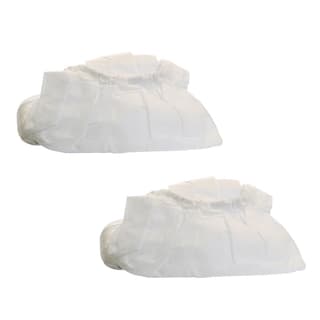
Disposable Leaf Bags
$39.00 $89.00 Save 56%
For peak leaf-fall weeks — run the robot, toss the full bag, click in a new one. The least glamorous product we sell and one of the most re-ordered.
View Details → Free shipping · 30-day returns

Layer 3: Keep skimmer and pump baskets empty
Your pool's built-in circulation is quietly the hardest-working leaf collector you own — until its baskets fill. A packed skimmer basket stops pulling surface water, so leaves that would have been captured drift, waterlog, and sink. A packed pump basket strangles flow for the whole system: weaker filtration, weaker returns, and a pool that stops helping you.
The fall cadence that works: empty the skimmer basket daily during peak drop (it takes thirty seconds), check it after every windy day, and clear the pump basket weekly. One extra trick for leaf season: run the pump somewhat longer than your summer schedule while trees are actively dropping — more hours of skimmer suction means more leaves captured while they still float, which is the whole game. And if you're closing the pool soon, keeping baskets and lines clear now makes closing day dramatically easier.
Layer 4: Stop leaves from reaching the water
The cheapest leaf to remove is the one that never lands. A few prevention moves pay off every single day of fall:
- Trim overhanging branches. Anything directly over the water drops straight in. A one-time trim converts daily cleanup into occasional cleanup.
- Mind the wind, not just the trees. Leaves travel. If your pool sits downwind of a leafy corner of the yard, a hedge, fence line, or planted windbreak intercepts a surprising share before it arrives.
- Relocate the pile. Don't rake or blow leaves anywhere upwind of the pool — we've seen immaculate yards refill their own pools by lunchtime.
- Time your cover. In heavy tree cover, a leaf net or cover is the ultimate layer — deploy it when daily drop starts winning, not on the first fallen leaf, so you're not trapping heat and debris under a cover in warm weather.
Why leaves are a water-quality problem, not just an eyesore
It's tempting to treat floating leaves as cosmetic. Chemistry says otherwise. Leaves left to steep release tannins — the same compounds that make tea brown — which stain plaster, vinyl, and fiberglass in ghostly outlines wherever a leaf settled. Fish out a leaf that's been sitting on the floor for a week and you'll often see its outline left behind; that shadow is the start of a stain. As they decompose, they dump phosphates into the water, and phosphates are fertilizer for algae; a leafy, neglected week is how a lot of green pools start. That's why serious leaf control belongs in the same conversation as the robots we recommend for algae-prone pools. And physically, leaves clog skimmers, lines, and filters — cutting circulation exactly when the pool needs it to fight back. Getting leaves out fast isn't tidiness; it's cheap insurance on your water chemistry.
A fall routine that keeps leaves out of your pool
| Task | Peak leaf-fall | Light season |
|---|---|---|
| Skim surface (or robotic skimmer runs) | Daily | 2-3 times a week |
| Empty skimmer basket | Daily | Weekly |
| Run leaf-bag robot cycle | Daily or every other day | 2-3 times a week |
| Clear pump basket | Weekly | Monthly |
| Rinse robot filters and bags | After every cycle | After every cycle |
The whole routine is minutes a day once the layers are in place — the robot and skimmer do the real labor, and you're just emptying containers. Owners running this system tell us fall stopped being the season they resent.
What to do about the tree, not just the leaves
Everything above is downstream of the actual source. Three interventions upstream cut the volume enough to change the routine — and they're worth considering before you buy more equipment.
Prune before the drop, not after. Thinning branches that overhang the water in late summer removes a meaningful share of the leaves that will land in October. It's the one intervention that reduces work rather than shifting it.
Read your prevailing wind. Leaves don't distribute evenly — they pile where the wind and the return jets push them. Aiming a return jet toward that corner concentrates debris where you can lift it out in one pass rather than chasing it around the pool.
Cover for the peak fortnight only. A leaf net over the pool for the two worst weeks of the drop catches the bulk of it, and it's far less commitment than closing early. If your yard drops in one dramatic burst rather than steadily, this is the highest-leverage move on the list.
Know when the tree wins. Some yards produce more leaf volume than any equipment can gracefully handle — mature oaks directly over the water, most obviously. In those pools, the honest answer isn't a bigger robot but a leaf-bag robot plus a surface skimmer working together, which is why the layered approach above exists.
Next step: build your leaf-season toolkit
The bottom line
Leaves are a layered problem, so they need a layered answer: catch what floats before it sinks, clear the floor with a robot that has genuine capacity, keep the baskets empty so circulation never stalls, and reduce what reaches the water in the first place. Skip any one layer and the other three work harder — usually the robot, which is the one you'll notice.
Start with the layer that hurts most. Drowning in floating leaves? Add a robotic skimmer. Carpeted floor every morning? A leaf-eating robot with an oversized bag is the fix. Not sure which robot fits your pool and debris load? Take the 60-second Help Me Choose quiz or see our full ranked best robotic pool cleaners — every robot ships free, with 30-day returns and a full manufacturer warranty. Fall doesn't stand a chance.
