The Short Answer
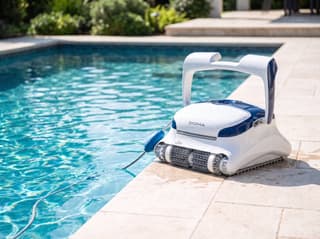
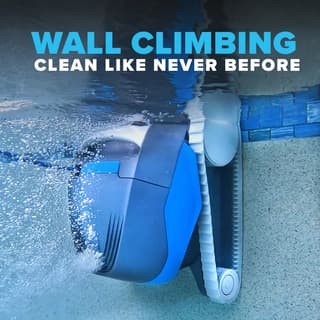
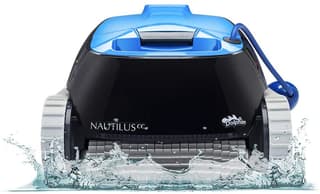
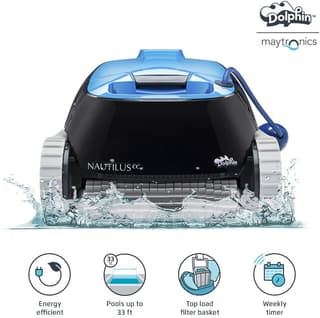
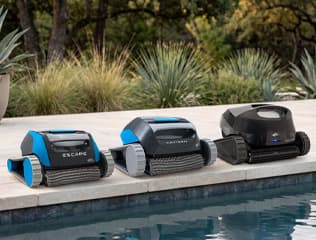
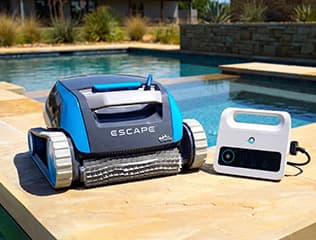
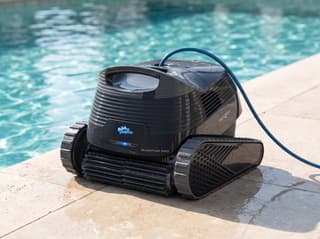
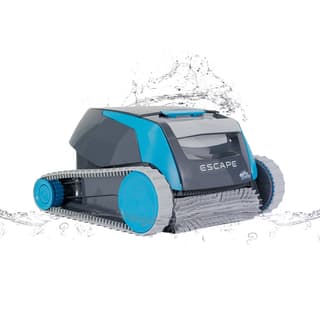
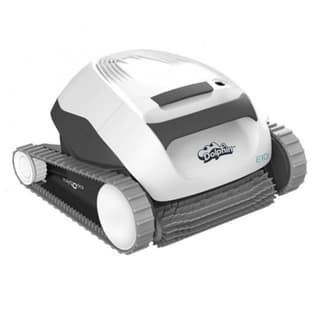
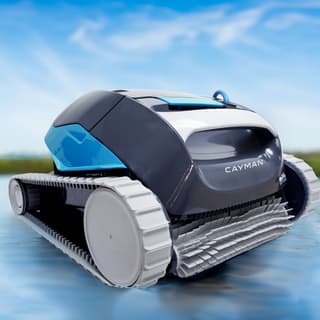
Compact size does not prove shallow-water compatibility. A robotic cleaner relies on being submerged and must be used within the depth range in its manual. Compare the Escape and E10 for a shallow above-ground main floor, and the Cayman when an inground layout also needs documented wall climbing.
Measure Every Shallow Zone
Record normal operating depth on the main floor, tanning ledge, entry steps, and the transition between them. Water level changes can turn a marginal area into an exposed one. Do not add water or place the robot on a ledge solely to force compatibility; use it only as the manufacturer directs.
Plan to Brush Shelves and Steps
Many sun shelves, Baja ledges, and entry steps are too shallow or geometrically awkward for an underwater robot. Brush fine dirt and pollen from those surfaces toward the submerged main floor, then use approved fine-filter media if the selected model supports it.
Verify the First Cycles
- Watch the transition to ensure the robot does not become stranded or partly exposed.
- Make sure the cable does not catch on rails, steps, or shelf furniture.
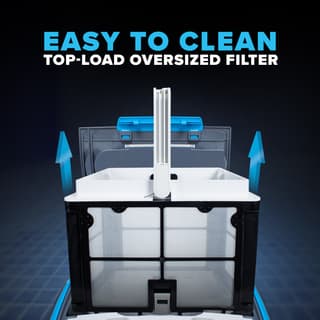
- Check the filter after brushing shelf debris into the main pool.
- Keep manual brushing in the schedule for any area the robot cannot safely enter.
Use the small-pool guide for length checks and the plunge-pool guide for compact, wall-heavy layouts. Gallons do not establish shallow-water compatibility.