Start with Pool Type, Then Length
A small footprint does not make every compact robot interchangeable. For an above-ground pool, floor coverage may be the main requirement. A small inground pool can add walls, a deep transition, and a waterline, so make sure those surfaces are included rather than assuming a length rating includes them.
Measure the longest wall-to-wall span instead of relying on gallons or the advertised pool diameter. For an oval or freeform pool, measure the longest route the cleaner must travel. Then read the current manual for the model's pool-type, cable, power-supply, and surface requirements.
Where the Shortlist Differs
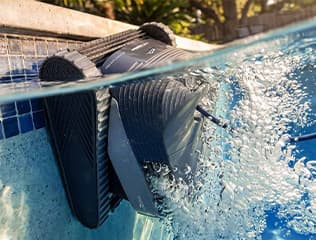
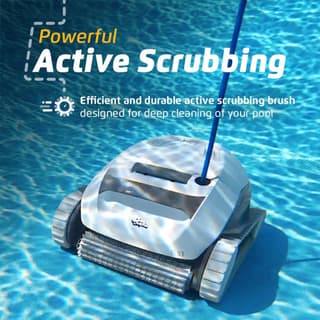
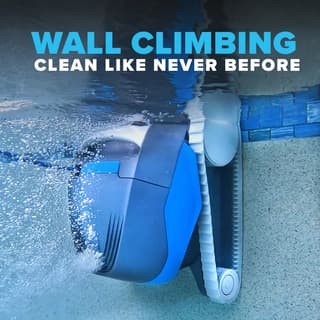
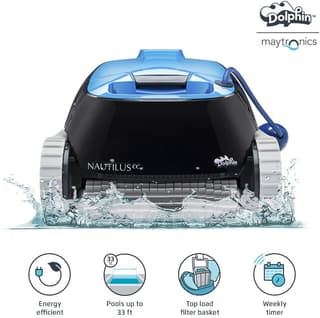
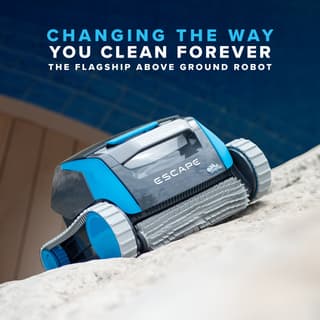
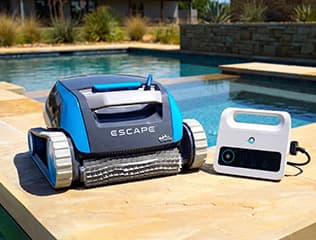
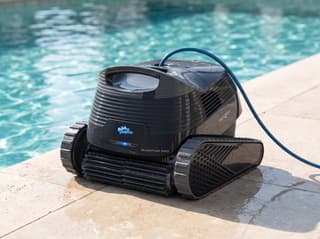
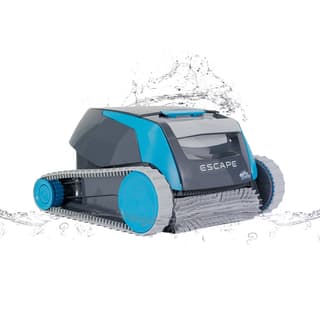
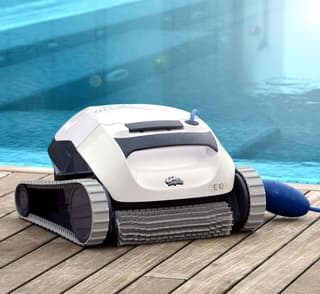
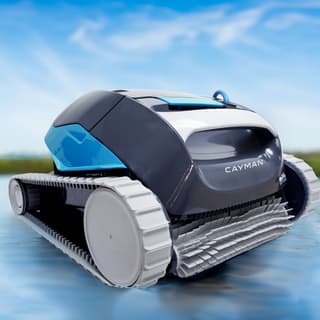
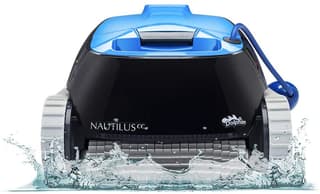
The Escape and E10 are reasonable comparisons for straightforward above-ground cleaning. The Cayman becomes more relevant when a compact inground pool needs wall climbing; the Nautilus CC offers another compact top-load-filter option. Those are fit distinctions, not a guarantee that any one model will cover every step, cove, or shelf.
Check the Missed Areas Early
- Watch the first full cycle and note whether the robot reaches corners, the wall transition, and the far end.
- Brush shallow ledges and tight steps toward the main floor; many robots cannot remain fully submerged on them.
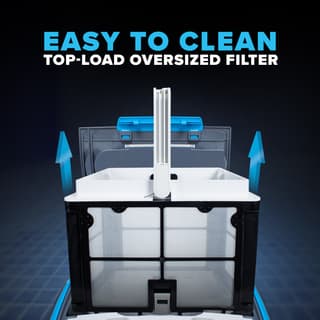
- Match the filter to the actual load: larger leaves and fine dirt need different maintenance.
- Empty and rinse the basket after the first few cycles so you can set a realistic cleaning schedule.
For a compact, wall-heavy layout, also compare the plunge-pool guide. If price is the deciding constraint, use the budget guide after confirming fit.