Grip and Gentleness for Gel Coat
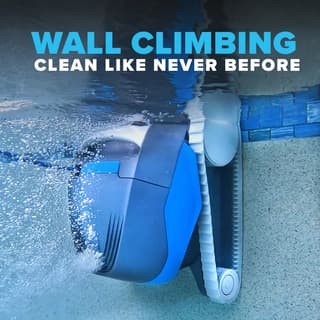
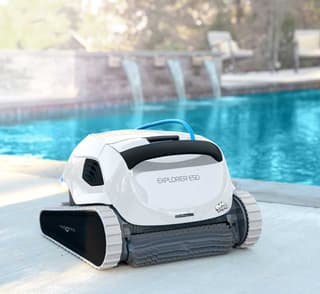
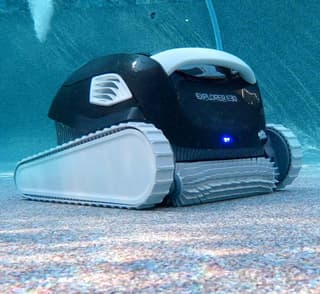
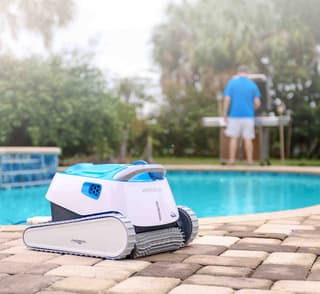
Smooth fiberglass can reduce traction, particularly on curved walls, steps, or a scaled waterline. Compare the manufacturer’s fiberglass approval, brush material, and stated wall coverage together; track design alone does not guarantee climbing on every shell. Cracked, blistered, or recently repaired gel coat should be evaluated before a robot is used.
We sort through pool size, debris, coverage, filters, and everyday upkeep so you can spend less time researching and more time swimming.
Compare Coverage and Filtration
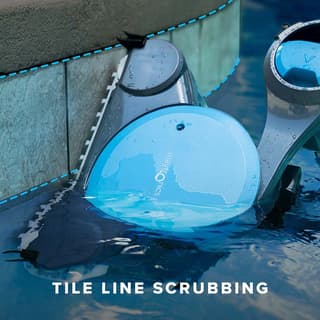
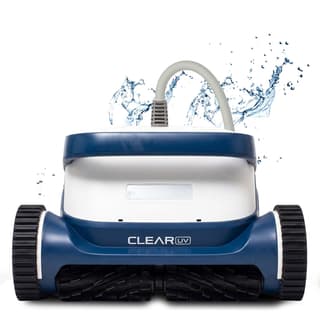
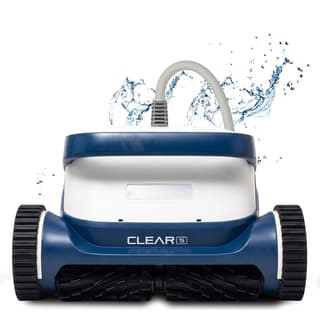
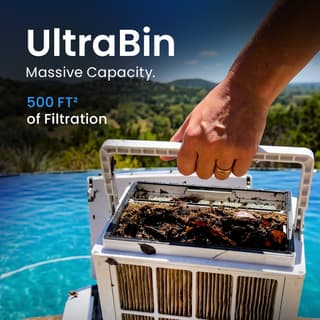
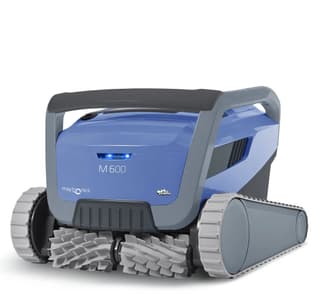
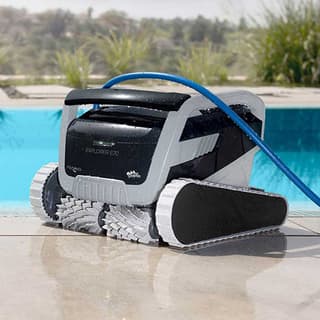
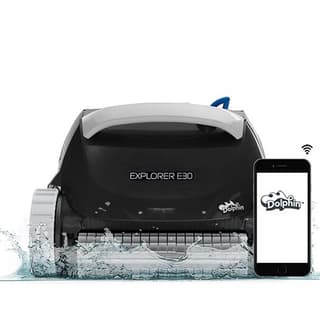
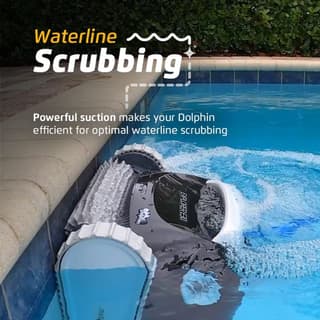
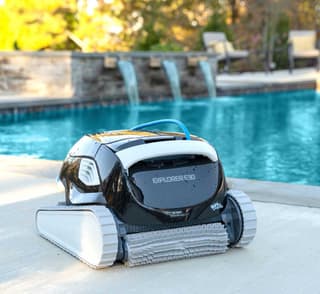
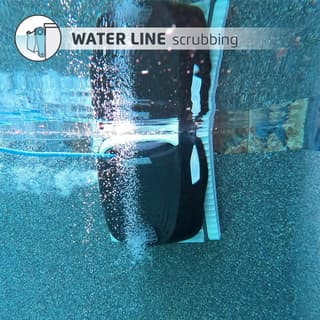
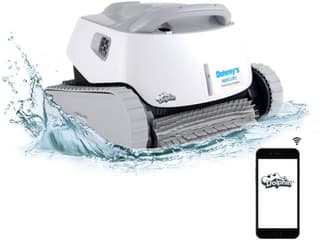
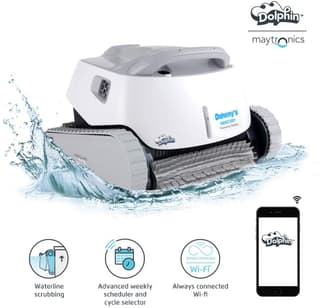
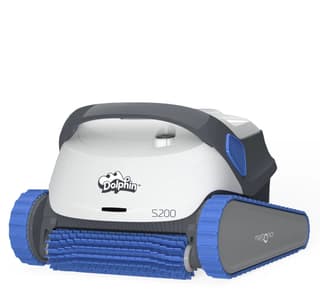
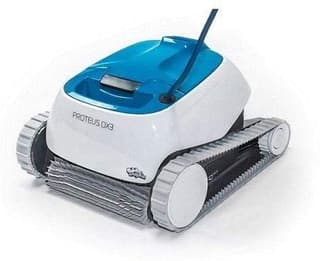
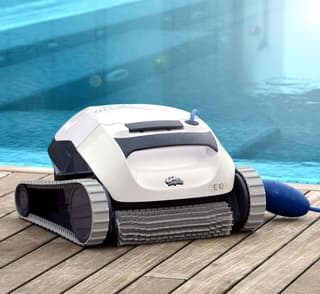
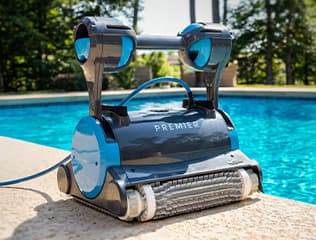
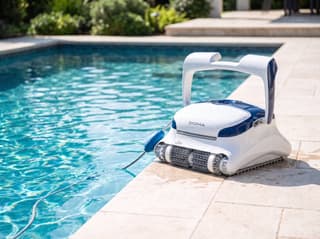
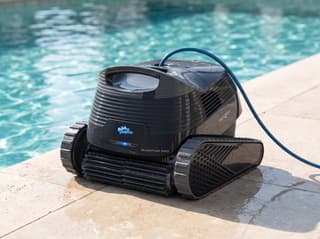
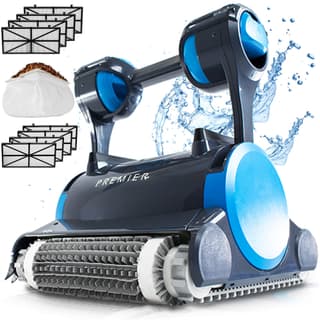
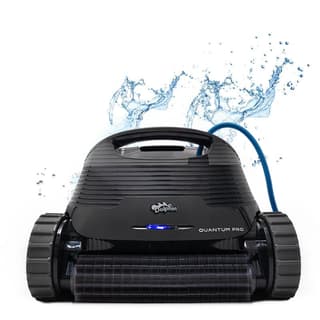
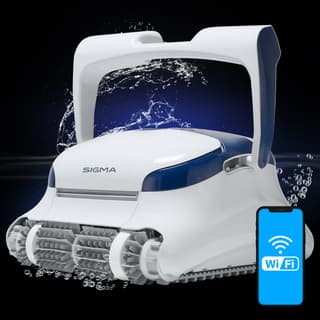
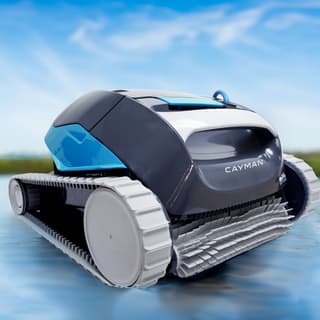
The Premier, Quantum, and Sigma are candidates when the specifications call for wall and waterline coverage. The Cayman is worth comparing when wall cleaning matters more than waterline scrubbing. Fine-filtration media can help with visible fine dirt, while a larger debris option may matter more near trees.
Fiberglass Fit and Limitations
- Loose debris is often visible on a smooth shell, but staining and bonded scale require chemistry or finish-specific treatment rather than extra robot cycles.
- Steps, tanning ledges, tight curves, and drains can interrupt navigation; plan to brush or vacuum any areas the robot consistently misses.
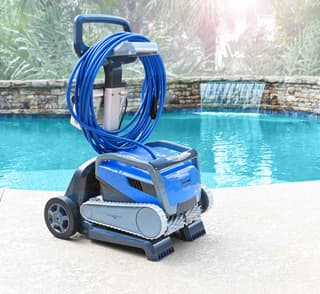
- Use the actual pool dimensions to choose cable length and cycle coverage instead of relying on a general fiberglass label.
Routine Care
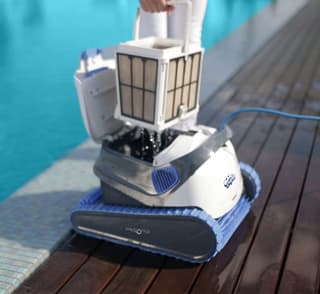
Rinse the filter, clear hair from moving parts, and inspect tracks and brushes for embedded grit that could mark a finish. If the pool uses a salt system, follow the cleaner maker’s chemistry and rinsing instructions and see the saltwater guide.