Rounds, Ovals and Rectangles: Working Out the Cable
Here is the arithmetic, using a setback of roughly 12 ft from the wall to the power supply as an example only; your manual gives the figure to use. Add the setback, the distance across the water to the farthest floor point, and about 4 ft for depth. The pattern to notice: where the power supply can sit decides which robot you need.
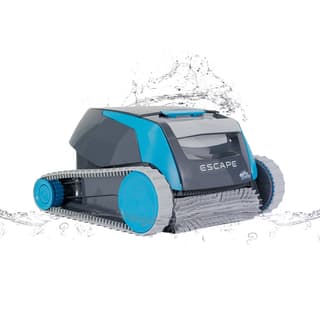
- Round, 18 ft: about 12 plus 18 plus 4, or 34 ft. The Escape's 40 ft cable covers it.
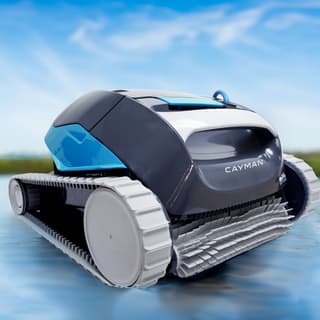
- Round, 24 ft: about 12 plus 24 plus 4, or 40 ft. That is the Escape's whole cable, so measure carefully or choose the Cayman.
- Rectangle of about 31 by 16 ft, power supply beside the middle of a long side: the far corners are roughly 22 ft away across the water, about 38 ft in all. The Escape reaches with little to spare; the Cayman reaches comfortably.
- The same pool with the power supply at one end: about 12 plus 31 plus 4, or 47 ft. Only the Cayman's 50 ft cable reaches.
Bestway Construction Notes
A few details are particular to Bestway pools. Oval Power Steel pools have angled side supports along the straight sides. They stand outside the liner, so the robot never meets them; the floor inside is clear. Hydrium pools use a rigid steel wall, which gives a robot a firmer surface than a frame pool wall, but they are still above-ground liner pools and still call for one of these two robots.
Swim Vista windows are set into the wall; treat the pool as any other of its shape. Fast Set ring pools are the weak fit: shallow, with inward-leaning walls, and usually seasonal. On the smaller ones a robot may not stay submerged, and a hand vacuum is the proportionate tool. None of the in-ground robots we sell, the Premier, Sigma, Quantum or the Clear models, should go in any Bestway pool.
Get the Floor Ready
Bestway liners arrive folded, and the fold lines and ground-cloth creases often survive the first fill as wrinkles. A robot rides over small ones. Larger folds can stop it. The time to fix them is at setup: fill to an inch or two, push the wrinkles out toward the wall with bare feet, then keep filling.
If the pool is already full, work on a warm afternoon when the vinyl is soft and move wrinkles a little at a time. Check too that the ground has not settled into a slope; a robot will still clean a slightly tilted floor, but debris gathers at the low side.
Tips for the First Week
- Watch the whole first cycle. Note where the robot hesitates, usually a wrinkle or the ladder, and fix that spot before the next run.
- Remove the ladder during cycles, and check that no hose or cover strap hangs into the water.
- Put the power supply beside the middle of a long side on ovals and rectangles to shorten the longest cable run.
- Rinse the basket after every cycle for the first week; a newly filled pool collects grass and grit from wet feet quickly.
- Lift the robot out before adding shock or other chemicals, and return it once the water is back to normal levels.