Best Robotic Pool Cleaner for Soft-Sided Pools: Ring Pools and Frame Pools

A soft-sided pool needs a light, above-ground-rated robot, and only two of the robots we compare qualify; here is how to choose, and when to skip the robot altogether.

2 ranked picks Find the right clean without paying for features you won’t use
The quick answer

Which Robot Should You Buy?

For a soft-sided pool, choose the Dolphin Escape: it is rated for above-ground pools, weighs 14.2 lb, finishes in 1.5 hours and has a 40 ft cable sized for these pools. Step up to the Dolphin Cayman for the largest frame pools, where its 50 ft cable and every-day timer earn the extra cost.

On this page: the picks · side by side · questions · our advice

Soft-sided pools are the inflatable-ring and steel-frame pools, sold under names like Intex, Bestway and Coleman, that go up in a weekend: a thin PVC liner, flexible walls, and 30 to 52 inches of water sitting on a ground cloth over lawn or sand. The best robotic pool cleaner for soft-sided pools has to respect all of that. It must be rated for above-ground use, light enough not to stress a thin floor, and short enough in cycle time to suit a small body of water.

Of the robots Pool Robots compares in these guides, two meet that test and five do not. We will also be straight about the awkward part: for a small ring pool that comes down in September, a robot can cost more than the pool did. This page shows where the line falls, so you buy one only if your pool will repay it.

The Two Robots That Belong in a Soft-Sided Pool

In order, with today’s price on each.

Top Choice
Dolphin Escape Robotic Pool Cleaner
$758 $899 Save $141

Price shown: Weekly Timer. Other versions from $659.

Maytronics

Dolphin Escape

Right-Sized for Frame and Ring Pools

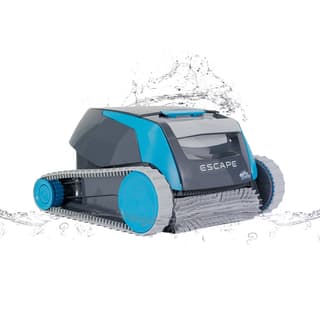
The Escape is the robot here for above-ground pools first. At 14.2 lb it is the lightest of the Dolphins compared in these guides, which matters twice: less load on a thin liner, and an easy lift over a 48-inch wall with no deck. Its 1.5-hour cycle matches the small water volume, and the 40 ft cable is long enough for typical frame pools without yards of slack floating around.

Cleaning is simple and effective: one HyperBrush spinning at twice the speed of standard Dolphin brushes, a top-load MaxBin basket 50% larger than standard Dolphin filters, and over 4,000 GPH of flow from its own motors. It is the lowest-priced pick here, and this kind of pool needs nothing more.

Best for
Frame pools from about 15 ft across and up, used through the whole summer.
Keep in mind
No timer as standard and a 40 ft cable; on rounds larger than about 24 ft, measure the cable run before you order.
No. 2
Dolphin Cayman Robotic Pool Cleaner
$1049 $1299 Save $250
Maytronics

Dolphin Cayman

For the Largest Frame Pools and Daily Runs

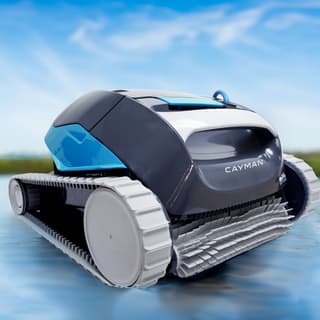
The Cayman is rated for above-ground and in-ground pools up to 33 ft, and it adds two things a big soft-sided pool can use. The cable is 50 ft, ten more than the Escape's, which settles the reach question on long rectangles and the widest rounds. And its power supply has a timer that runs a cycle every day, so a pool under trees stays ahead of debris without anyone starting it.

The rest is close to the Escape: one HyperBrush, a MaxBin basket with a one-tab top hatch, dual 24-volt DC motors and a 2-hour cycle, at 14.6 lb. You pay more for cable and timer. If your pool is 18 ft across and you are happy to press a button, you do not need them.

Best for
Large rectangular or oval frame pools, long cable runs, and owners who want a cycle every day.
Keep in mind
The timer has one setting, every day, and the cable has no swivel; on a small pool the extra cost buys nothing.

What a Thin Liner and Flexible Walls Change

  1. An Above-Ground Rating

    In-ground robots are heavier and built for rigid walls and deep water. Only a robot published for above-ground pools belongs on a thin PVC floor. Of the seven robots in our guides, that means the Escape and the Cayman.

  2. Weight on the Floor

    The liner is the floor, with only a ground cloth and soil beneath. A lighter robot is easier on it and easier to lift over a wall with no deck to stand on. The Escape is 14.2 lb and the Cayman 14.6 lb, the two lightest of the Dolphins compared here.

  3. Water Depth

    A robot has to stay fully submerged to pull water and steer. Frame pools with 42 to 52 inches of water are fine. Very shallow ring pools may not cover the robot well enough, and no minimum depth for these Dolphins is on the published spec sheet, so check the manual.

  4. Wall Flex

    Soft walls give when a robot pushes against them, so expect it to climb part-way, not to the top, and less on ring pools than on framed ones. Neither pick cleans the waterline in any pool, so plan on wiping the scum line yourself.

  5. Cable Length Against Pool Size

    The cable has to reach from a power supply set back from the wall to the far side of the floor. The Escape's 40 ft cable covers the common sizes; the Cayman's 50 ft cable gives margin on the largest.

Escape and Cayman Side by Side

Specification Dolphin Escape Dolphin Cayman
Price today $758

Weekly Timer, from $659.

$1049
Pool type Above-ground and in-ground In-ground and above-ground
Pool length Up to 33 ft Up to 33 ft
Cleans Floor and walls Floor and walls
Cable 40 ft 50 ft
Filtration MaxBin basket; NanoFilter panels optional MaxBin basket with fine panels; NanoFilter panels optional
Robot weight 14.2 lb 14.6 lb
Warranty 2 years 2 years
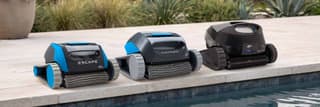
Dolphin Escape, Cayman and Quantum robotic pool cleaners lined up on a pool deck
Start with the pool you own. Pool type narrows the list before any feature does.

When a Robot Is Worth It, and When It Is Not

Start with the honest arithmetic. A small ring pool for the kids, filled in June and drained in August, costs less than either robot on this page. A net and a hand vacuum are the sensible tools there, and we would rather say so than sell you a machine that spends ten months in a closet.

The balance tips with size and season. A frame pool 15 ft or larger has enough floor to make hand-vacuuming a chore, and the small filter pumps sold with these pools struggle to pull a manual vacuum. If the pool stays up from spring to fall, a robot that cleans the floor on its own filter several times a week pays its way. It also moves with you: both picks are rated for rigid above-ground pools up to 33 ft if you upgrade later.

Ring Pools Versus Frame Pools

Inflatable-ring pools have walls that lean inward and rise with the water level. They are usually the shallowest soft-sided pools, and the wall gives a robot little to push against. On small or shallow ones, a robot may not stay submerged, or may nose into the sloping wall and turn back early. Expect floor cleaning only, and check the manual for depth guidance before buying for a ring pool.

Frame pools hold their walls upright on steel posts, with deeper water and a flatter floor. This is where both picks do their best work. The wall still flexes between posts, so climbing is partial, but the floor, where the dirt is, gets covered.

Prepare the Floor Before the First Run

Most trouble in soft-sided pools comes from under the liner, not from the robot. A wrinkle in the liner or the ground cloth is a ridge the robot has to ride over, and a big fold can stop it. Heel dents in soft ground collect debris the brush skims past. A few minutes of preparation pays off.

  • Smooth wrinkles outward toward the wall with your feet while the water is warm and the liner is supple.
  • Pick stones and sticks off the floor by hand before the first cycle.
  • Lift the ladder out so the cable cannot wrap around its legs.
  • Watch one full cycle to see how the robot handles the pump's inlet and outlet fittings.

Running a Robot in a Soft-Sided Pool

  1. Lower the robot in by hand and let it settle on the floor before pressing start; do not drop it onto the liner.
  2. Set the power supply on a dry stand at the setback your manual gives, beside the middle of the pool's longest side.
  3. Rinse the basket after every cycle and let the robot dry in shade, not on the lawn in full sun.
  4. Take the robot out before shocking or adding chemicals, and whenever the pool will sit unused for a long stretch.
  5. Feed in only as much cable as the pool needs and leave the rest coiled loosely by the power supply; neither pick has a swivel.

Soft-Sided Pool Questions

Will a robotic cleaner puncture a soft-sided pool liner?

Both picks are published for vinyl liner surfaces and for above-ground pools, and they move on HyperGrip tracks. The practical risk sits under the liner: a stone or root beneath a thin floor is a hard point whatever crosses it. Clear the site before setup, smooth wrinkles, and inspect the floor now and then.

How deep does the water need to be for a robot to work?

Deep enough to keep the robot fully underwater through the whole cycle. Frame pools with 42 to 52 inches of water are comfortably within that. For shallow ring pools we cannot give you a number, because a minimum depth for these Dolphins is not on the published spec sheet. Check the manual, and if in doubt, ask us before ordering.

Can I use an in-ground robot in a soft-sided pool if I already own one?

We advise against it. The Premier, Sigma, Quantum and both Clear models are in-ground robots: heavier, built for rigid walls and deeper water, and not published for above-ground pools. On a thin PVC floor with flexible walls that is the wrong match. The best robotic pool cleaner for soft-sided pools is an above-ground-rated one.

Will the robot climb the walls of a soft-sided pool?

Part of the way, at best. Both picks are floor-and-wall cleaners, but a flexible wall gives under the robot's push, so it tends to climb a short distance and turn back. On ring pools with inward-leaning walls, expect little or no climbing. Neither robot cleans the waterline, so wipe that by hand.

How long does a cleaning cycle take in a soft-sided pool?

The Escape runs a 1.5-hour cycle and the Cayman a 2-hour cycle, whatever the pool's size. In a small pool the robot simply covers the floor more than once. Plan the cycle for a time when nobody is swimming, and lift the robot out afterward if the pool is about to be used.

The Verdict

Our Advice on Soft-Sided Pools

Our advice: decide whether the pool deserves a robot before deciding which one. Small, shallow or short-season pools do not. Frame pools 15 ft and larger that stay up all summer do, and for nearly all of them the Escape is enough robot at the lowest price here. Pay for the Cayman only when the cable run is long or a cycle every day matters to you. Either way, smooth the floor first and wipe the waterline yourself.

Our top choice

Dolphin Escape

Right-Sized for Frame and Ring Pools

$758 $899

Price shown: Weekly Timer. Other versions from $659.

Need Help Choosing?

Tell us about your pool and what keeps landing in it. Five quick answers are enough to narrow hundreds of options to a handful worth buying.

5Quick Questions
60Seconds
ZeroGuesswork