Do the Cable Sum Before You Order
The sum has three parts: the distance from the power supply to the water's edge, the reach across the water to the farthest point, and the depth at that point. The second depends on where the power supply sits, and the table shows how much it changes.
Add your own setback and depth to the middle column, then compare the total with the cable. If it comes within a few feet of the cable's length, treat it as too short: a robot needs slack to turn and climb. The fix is usually to move the power supply toward the middle of the long side, not to buy a different robot.
Above-Ground Ovals and 30 ft Rounds
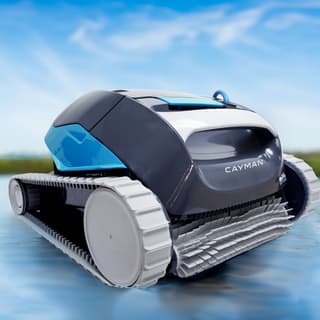
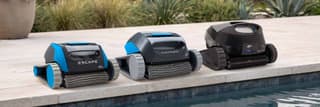
Only two robots in these guides are rated for above-ground pools, and at 30 ft the difference between them is cable. The Dolphin Escape is rated to 33 ft and costs less than the Cayman, but its 40 ft cable is the tightest fit on this page: on a 30 ft round it would have to cross the full diameter with almost nothing left for the gap to the power supply. That is why it is not ranked here. On a 15 x 30 ft oval with an outlet right beside the middle of a long side it can work; measure first.
In-Ground 15 x 30: The Value Pick or the Safe Pick
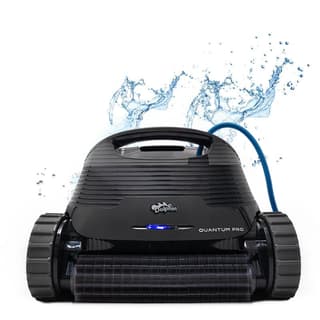
On a plain rectangle with the outlet near the middle of a long side, both of our top two picks will clean the pool. The Cayman does floor and walls on a daily timer and leaves the tile line and steps to you. The Quantum does all of it and gives you 20 ft more rating than the pool needs. If the pool has a bump-out, a spa wall or an outlet at one end, that margin stops being a luxury.
Three Checks for a 30 ft Pool
- Find the outlet you will actually use and measure from it to the pool edge. That number often decides between a 50 ft and a 55 ft cable.
- On a 30 ft round, start the robot from the side nearest the power supply so the cable pays out across the pool, not around it.
- Watch the first full cycle. If the cable goes taut at the far wall, move the power supply before the next run.