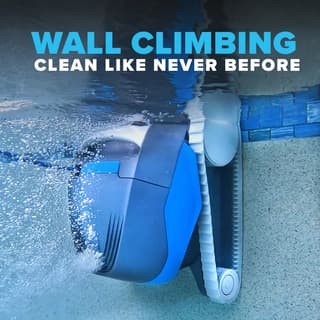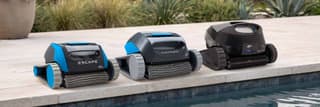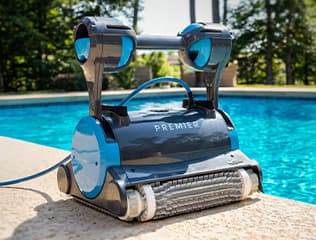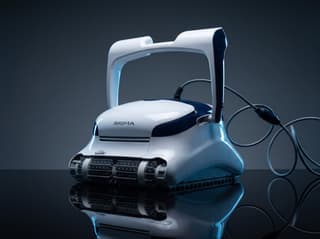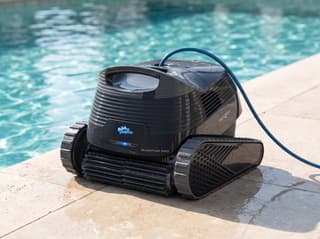
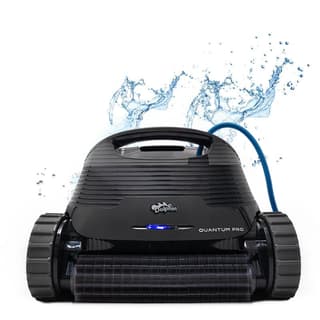
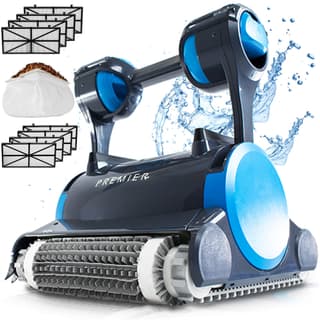
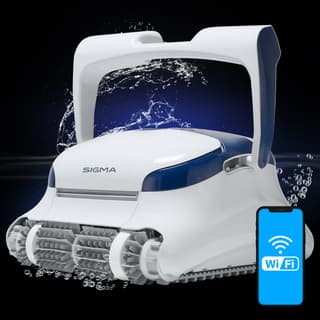
The Short Answer
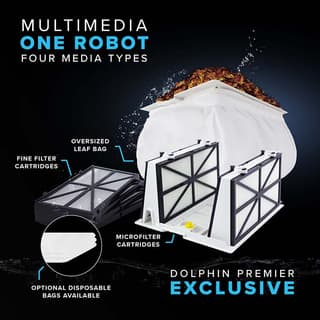
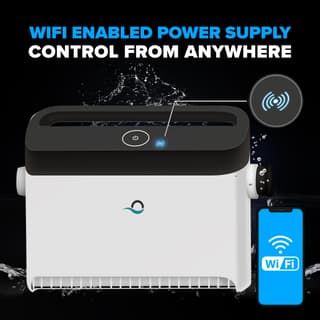
Start with large-pool models, but do not assume the category guarantees fit. Compare the current Quantum for connected controls and accessible basket capacity, the Premier for changing filter-media needs, and the Sigma for gyroscope navigation plus a triple-motor configuration. The right choice depends on the measured route and debris, not the gallon number by itself.
Use Gallons as a Cross-Check, Not the Size Rating
Choose by measured length, shape, and usable cable reach first. Gallons describe water volume; they do not show whether a cable can reach the far wall and deep-end floor, or how a robot will handle a long, freeform, or divided layout. A long, narrow pool can need more reach than a compact pool holding the same volume.
For a rectangular pool, gallons are approximately length × width × average depth × 7.48. Use that calculation to check the stated volume, then compare the longest dimension and cable-routing requirements with the current product manual. Steps, shelves, islands, depth changes, and the required power-supply location can all reduce practical coverage.
Check the Deep End and Shape
A deep end adds floor slope and wall height to the route. A freeform lobe or offset spa can also create a farther point than the nominal length suggests. Follow the deep-pool measurement guide, and make sure the permitted power-supply location instead of treating cable length as fully usable in the water.
Plan the Debris and Maintenance Load
- Compare large-debris media when seasonal leaves are the main problem and fine filters when dust or pollen dominates.
- Pre-skim branches and objects that could block the intake or brushes.
- Inspect the filter after the first heavy cycle to learn whether one run exceeds practical capacity.
- Brush stairs, sun shelves, and persistent dead zones toward an area the robot reaches.
The large-pool guide covers more reach questions, while the waterline guide helps decide whether that extra coverage is worth prioritizing for your finish and routine.