What to Look for in a Commercial-Rated Robot
When you request quotes for a full-size public pool, these are the points to compare. We describe them in general terms because the right numbers depend on your pool.
- Cable length matched to the pool: enough to reach the farthest corner from the power point, deep end included. Large pools call for cables well beyond anything on this page.
- Cycle time: a choice of cycle lengths, with one that completes the whole pool inside your overnight closure.
- Filter capacity: large filters that empty easily, ideally with fine and coarse media.
- A caddy: commercial robots are heavy, and a caddy is how one person moves one from storage to the water.
- Service support: who repairs it, how fast, and whether parts are available in season.
- A commercial warranty: written for daily use at a public facility.
The Narrow Case Where These Robots Fit
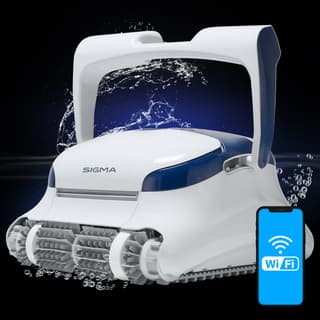
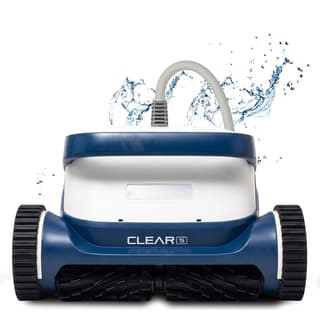
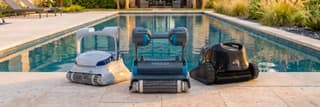
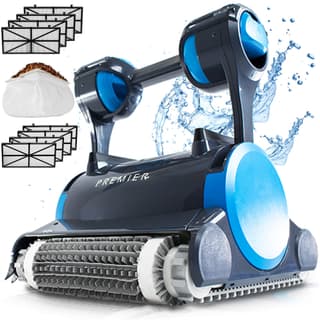
Some public pools are small. A campground pool, a village park pool or a small recreation-center pool is often 20 x 40 ft or 25 x 50 ft, no bigger than a large backyard pool. If the longest straight run is 50 ft or less, the Premier, Sigma or Clear S can handle nightly floor, wall and waterline cleaning between your operator's own checks.
Accept the terms going in. These are residential robots on residential warranties. They do not replace sanitizer or circulation, they play no part in meeting any regulation, and they must not be in the water with swimmers. Wading pools and splash areas are too shallow for them. Treat the robot as a housekeeping tool that spares staff the manual vacuuming.
What to Have Ready for a Sizing Call
A sizing conversation goes quickly when the facts are on hand. Gather these before you get in touch, and we will tell you plainly whether a robot here fits or whether the pool needs commercial equipment.
- Length, width, and depth at the shallow and deep ends.
- Shape, including any L-leg, diving well or attached wading area.
- Surface: plaster, tile, liner or other.
- The hours the pool is closed each night.
- Where the nearest outlet is, and where the robot will be stored.
- Who will operate it.
If You Run One at a Small Public-Access Pool
- Run the cycle only while the pool is closed, and have the opening guard lift the robot out before unlocking.
- Empty and rinse the filter after every cycle; a public pool loads fine filters far faster than a home pool does.
- Store the robot and power supply indoors and locked. Add a caddy, sold separately, if storage is far from the water.
- Take the robot out before shocking or dosing, and note it in the operator's log.